
Fluoride is one of the most important ingredients in modern toothpaste. It helps protect tooth enamel, prevent cavities, and support better oral health. However, not all fluoride ingredients work in exactly the same way. Two common options are stannous fluoride and sodium fluoride. When comparing stannous fluoride vs sodium fluoride, many people want to know which ingredient offers better protection. Both help prevent tooth decay, but they have different properties and additional benefits.
In this guide, we will compare their functions, advantages, and possible drawbacks. You will also learn how to choose a fluoride toothpaste that matches your oral care needs.
What Is Stannous Fluoride?
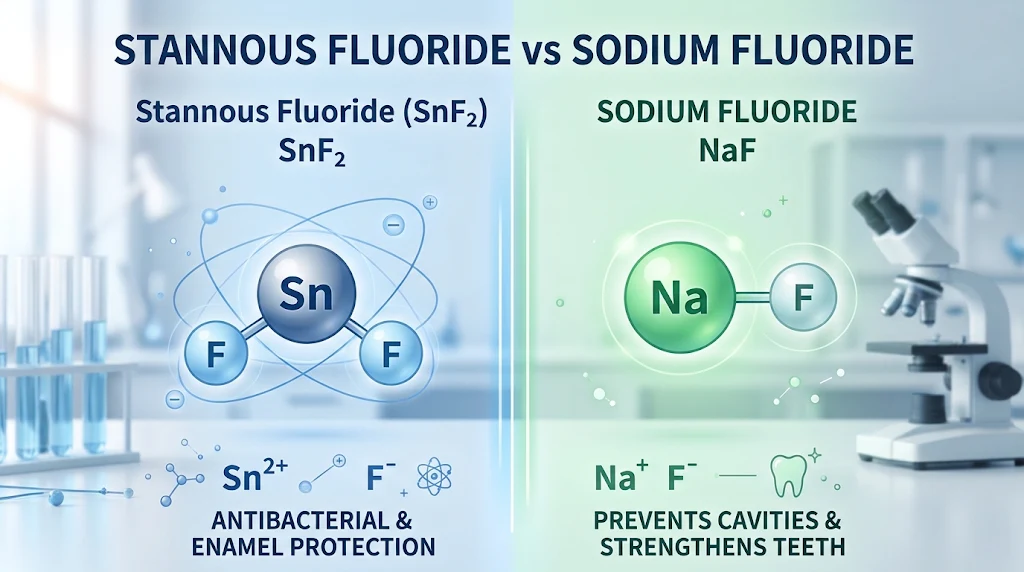
Stannous fluoride is a fluoride compound containing tin and fluoride ions. Its chemical formula is SnF2. It helps strengthen tooth enamel and protect teeth against acid attacks from bacteria and food.
One important feature of stannous fluoride is that it helps fight harmful bacteria in the mouth. It can help reduce harmful oral bacteria and control plaque buildup along the gumline.
Key Benefits of Stannous Fluoride
Stannous fluoride offers several oral care benefits:
- Cavity protection: It helps strengthen tooth enamel and repair early signs of enamel damage.
- Plaque control: It helps fight harmful bacteria and reduce plaque buildup.
- Gum health: It can help reduce gingivitis symptoms, including gum inflammation and bleeding.
- Sensitivity relief: Some formulations help block exposed dentinal tubules and reduce tooth sensitivity.
- Enamel protection: It may provide additional protection against acid-related enamel erosion.
However, some stannous fluoride formulations may cause temporary surface staining. Manufacturers use modern formulas to improve product performance and reduce this risk.
What Is Sodium Fluoride?
Sodium fluoride is another widely used fluoride compound in toothpaste. Its chemical formula is NaF. It supplies fluoride ions that help strengthen tooth enamel and prevent cavities.
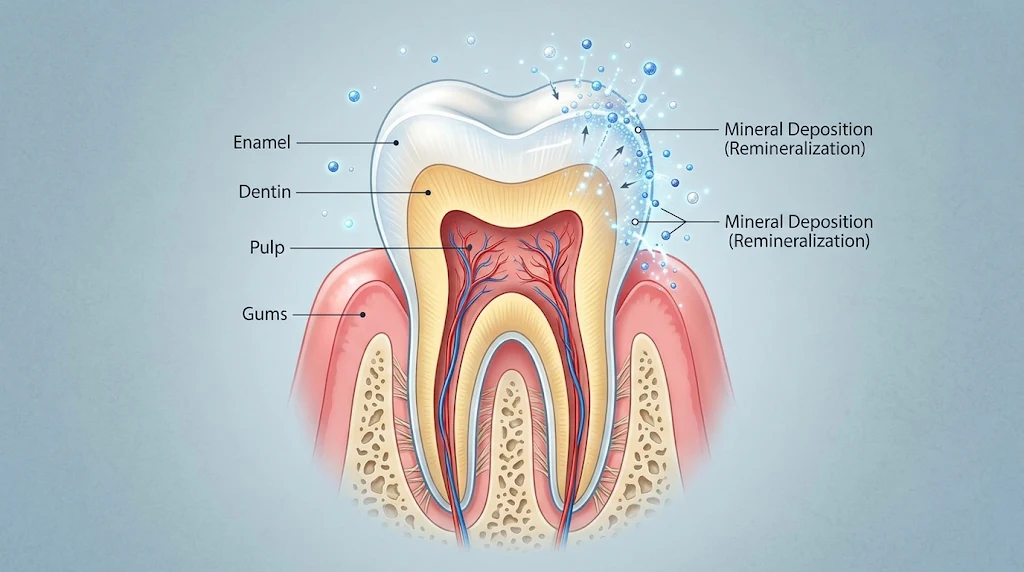
Fluoride helps restore minerals in tooth enamel. It also makes teeth stronger against acid attacks.
Many toothpaste manufacturers use sodium fluoride because it helps protect teeth against cavities and works well with other ingredients.
Key Benefits of Sodium Fluoride
Sodium fluoride has several advantages:
- Cavity prevention: It helps protect teeth against tooth decay.
- Enamel strengthening: It helps repair weakened tooth enamel.
- Stable formulation: It is compatible with many commonly used toothpaste ingredients.
- Everyday protection: It is suitable for regular oral care when used as directed.
- Wide availability: Many toothpaste manufacturers use it in their daily fluoride toothpaste products.
For people who mainly want routine cavity protection, sodium fluoride is a practical choice.
Stannous Fluoride vs Sodium Fluoride: Main Differences
Although both ingredients provide fluoride protection, their additional effects are different. Understanding these differences can help consumers make better toothpaste choices.
| Comparison | Stannous Fluoride | Sodium Fluoride |
|---|---|---|
| Chemical formula | SnF2 | NaF |
| Cavity prevention | Yes | Yes |
| Enamel strengthening | Yes | Yes |
| Antibacterial activity | Additional benefit | Limited direct antibacterial activity |
| Plaque control | Helps control plaque | Mainly supports cavity prevention |
| Gum health | May help reduce gingivitis | No comparable direct benefit |
| Sensitivity relief | Available in suitable formulas | Usually needs additional ingredients |
| Surface staining | Possible with some formulas | Generally less associated with staining |
The main difference is that stannous fluoride offers additional benefits related to plaque, gum health, and sensitivity. Sodium fluoride focuses primarily on cavity prevention and enamel protection.
Both ingredients work well when toothpaste contains the right amount of fluoride.
Which Is Better for Cavity Protection?
When comparing stannous fluoride vs sodium fluoride, cavity protection is one of the most important factors.
Both ingredients help prevent tooth decay. Both ingredients provide fluoride to help restore lost minerals in tooth enamel. They also make teeth stronger against acids produced by mouth bacteria.
The effectiveness of a toothpaste also depends on its fluoride concentration, formulation stability, and regular use.
For everyday cavity prevention, either ingredient can be a suitable option. Consumers should check the fluoride level in toothpaste. They can also look for the American Dental Association (ADA) Seal of Acceptance when choosing a product.
Which Fluoride Is Better for Gum Health and Sensitive Teeth?
The answer depends on your specific oral care needs.
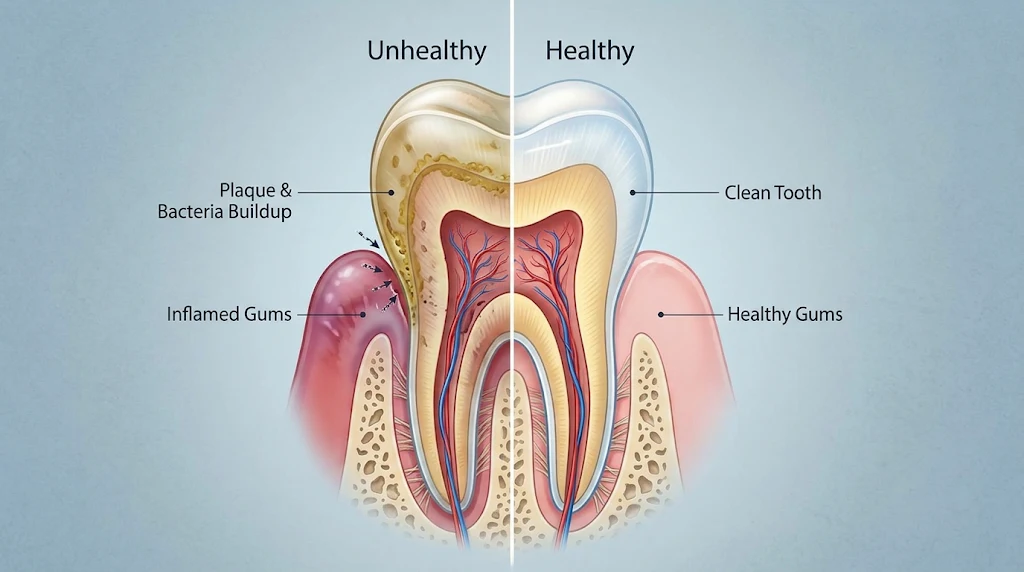
Stannous fluoride may be a better option for people who want additional support for gum health. It helps fight harmful bacteria, reduce plaque buildup, and lower gum inflammation.
It may also help people with sensitive teeth. Certain stannous fluoride formulations can block exposed dentinal tubules, reducing discomfort caused by hot, cold, or sweet foods.
Sodium fluoride remains a suitable choice for people whose main concern is preventing cavities. However, a sodium fluoride toothpaste may include other active ingredients to provide sensitivity relief or additional oral care benefits.
Consult a dentist if you experience frequent gum bleeding or ongoing tooth sensitivity.
How to Choose the Right Fluoride Toothpaste
Choosing between these two fluoride ingredients does not need to be complicated. Start by identifying your main oral care concerns.
Consider the following factors:
- For everyday cavity protection: Choose a fluoride toothpaste containing an appropriate concentration of sodium fluoride or stannous fluoride.
- For plaque and gum care: Consider a stabilized stannous fluoride formula.
- For sensitive teeth: Choose a toothpaste that contains stannous fluoride or another ingredient that helps reduce tooth sensitivity.
- For product safety: Check the ingredient list, fluoride concentration, and relevant dental approval.
- For regular use: Follow the product instructions and brush twice daily.

You can also explore different oral care formulations in the Oralgos toothpaste product range.
Stannous Fluoride vs Sodium Fluoride: Final Verdict
Which fluoride ingredient offers greater benefits: stannous fluoride or sodium fluoride?
People have different oral care needs, so the best choice depends on their individual needs. Both ingredients help prevent cavities and strengthen enamel.
Stannous fluoride may offer more benefits for people concerned about plaque, gum inflammation, and tooth sensitivity. Sodium fluoride is an effective and widely used option for everyday cavity protection.
The best choice depends on your oral health needs, the complete toothpaste formulation, and the fluoride concentration.
For consumers, understanding these differences makes toothpaste selection easier. Oral care brands and manufacturers should choose the right fluoride ingredient for each product. This helps them meet the needs of different markets.
A well-designed toothpaste should combine effective active ingredients, formulation stability, and a pleasant daily brushing experience.