Consumer demand for whiter teeth continues to grow. At the same time, concerns about enamel damage, tooth sensitivity, and long-term oral health are increasing. For manufacturers and brand owners, the challenge is clear. How can a whitening toothpaste deliver visible results without compromising safety or regulatory compliance? This article explores the core principles, key ingredients, and formulation strategies behind safe whitening toothpaste. It helps oral-care professionals balance efficacy, safety, and market expectations.
Why “Safe Whitening Toothpaste” Matters More Than Ever
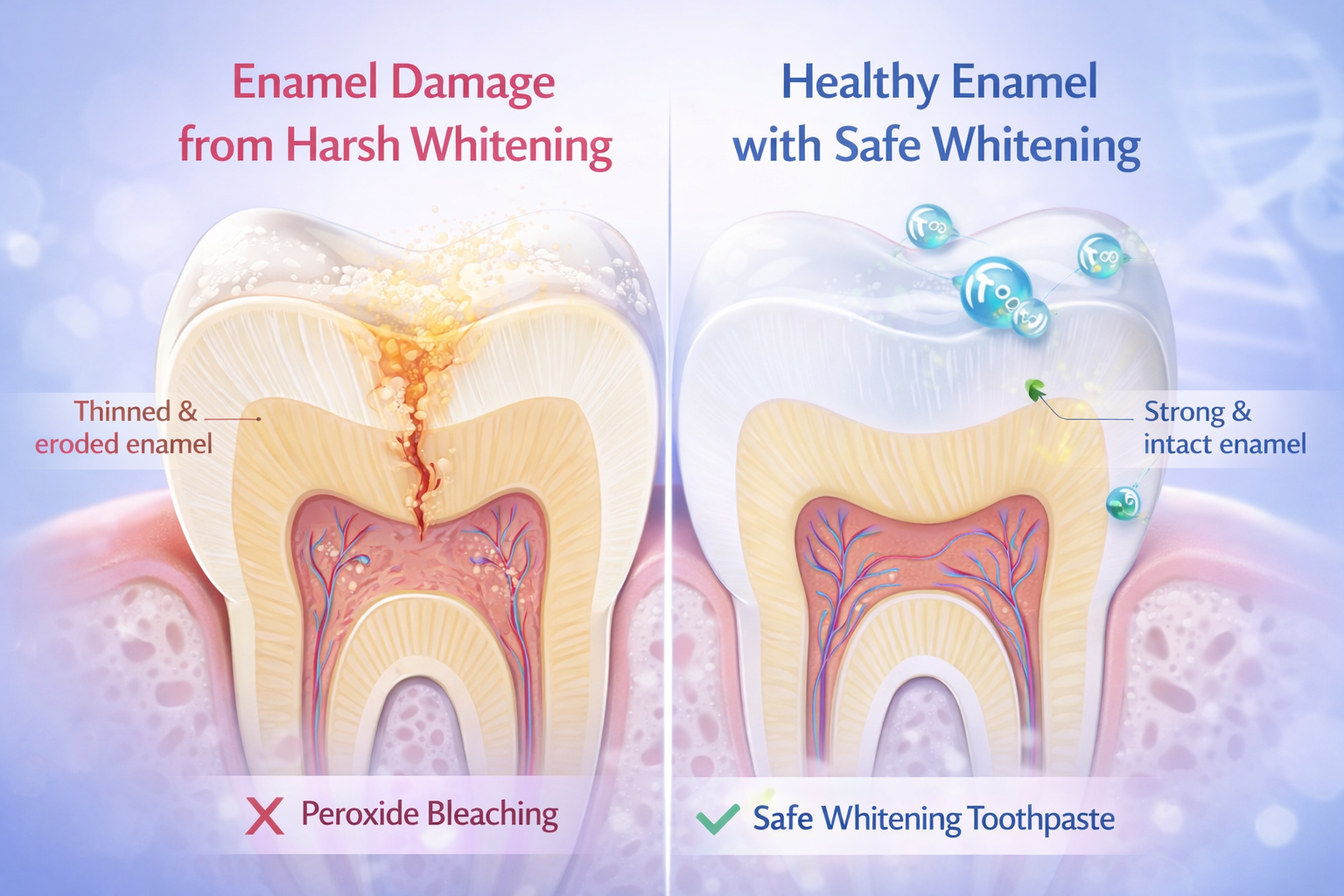
Traditional whitening solutions often rely on aggressive bleaching agents that prioritize speed over safety. These methods may deliver short-term brightness. However, they also increase the risk of enamel erosion, gum irritation, and tooth sensitivity.
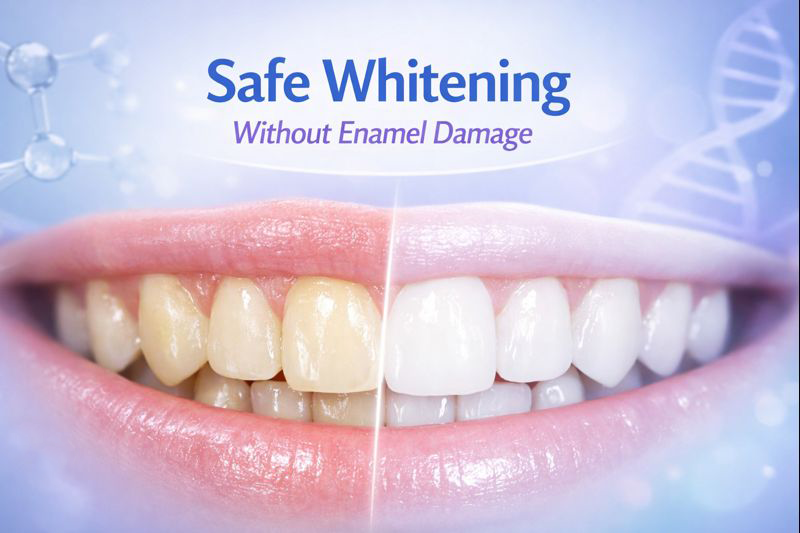
A safe whitening toothpaste takes a different approach. Rather than altering tooth structure, this approach focuses on surface stain management, optical correction, and enamel-friendly polishing. It aligns with guidance from professional bodies such as the American Dental Association (ADA).
According to the American Dental Association, whitening products should minimize enamel abrasion and avoid prolonged exposure to harsh oxidizing agents. This principle has become a baseline expectation in modern toothpaste formulation.
Core Principles of an Enamel-Friendly Whitening Toothpaste
A truly safe whitening toothpaste is built on three non-negotiable principles:
Protecting Enamel in Gentle Whitening Toothpaste
Whitening should never come at the cost of enamel loss. Low-abrasion systems (RDA-controlled formulations) are essential to protect tooth surfaces during daily use.
Gentle Whitening Mechanisms for Toothpaste Safety
Instead of peroxide-heavy bleaching, safer formulations rely on physical stain removal, optical color correction, or mild chemical interactions that do not penetrate enamel.
Ensuring Daily Use Safety in Whitening Toothpaste
A whitening toothpaste is not a one-time treatment—it is a daily-use product. Manufacturers must evaluate stability, material safety, and cumulative safety over extended use cycles.
Whitening Methods That Support Safe Formulation
Manufacturers recognize that different whitening technologies do not perform equally. Below are the most commonly used approaches in a safe whitening toothpaste.
Color Correction Technology
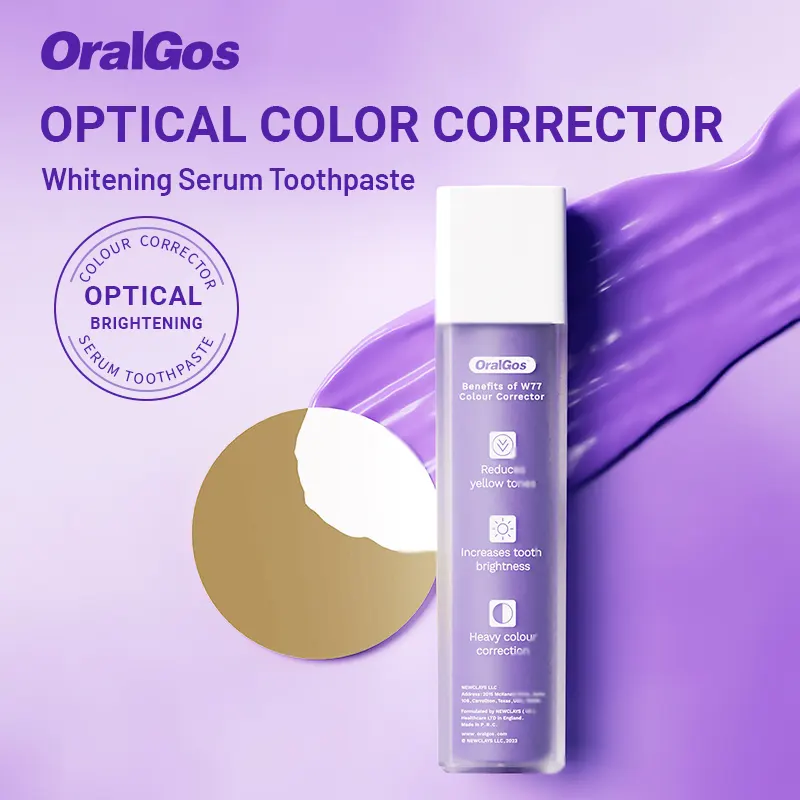
Purple or blue pigments neutralize yellow tones through optical contrast rather than chemical bleaching. This method delivers an immediate visual whitening effect without altering tooth structure.
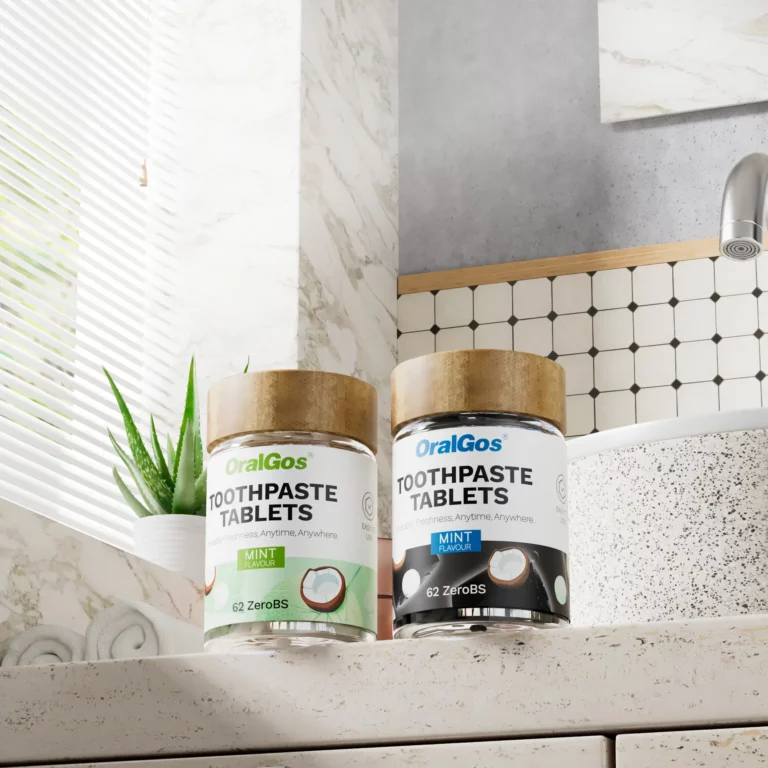
An example of this approach is the OralGos Colour Corrector Toothpaste. It uses color correction instead of peroxide-based bleaching to achieve visible brightness.
Controlled Abrasive Polishing
Manufacturers commonly use hydrated silica and calcium carbonate to gently polish away surface stains. In safe whitening toothpaste, manufacturers adjust particle size and hardness to remain within enamel-safe limits.
Activated Charcoal
Charcoal can absorb pigments and stains, but overuse or poor formulation may increase abrasion risk. When properly balanced, charcoal can support whitening while maintaining safe levels. Products such as Fluoride-Free Charcoal Toothpaste demonstrate this approach.

Key Ingredients in a Safe Whitening Toothpaste
Ingredient selection defines whether a whitening toothpaste is truly safe or simply “fast-acting.”
Low-RDA Abrasives
Hydrated silica with controlled morphology is the backbone of enamel-safe stain removal.
Optical Pigments
CI violet or blue pigments enable non-invasive whitening by color balancing rather than oxidation.
Remineralizing Agents
Ingredients such as fluoride alternatives or calcium-based compounds help reinforce enamel during daily brushing. This feature sets safe whitening toothpaste apart from other products.
Gentle Surfactants
Milder foaming agents reduce irritation, especially for users with sensitivity concerns.
Regulatory and ADA-Aligned Safety Considerations
Formulating a safe whitening toothpaste is not just about performance—it is about compliance and trust.
The American Dental Association emphasizes:
- Controlled abrasivity
- Proven ingredient safety
- Clear labeling and usage guidance
Manufacturers targeting global markets must also consider regional cosmetic and OTC regulations, ensuring whitening claims are supported without crossing into drug-like territory.
Balancing Whitening Performance and Brand Credibility
In today’s market, consumers are increasingly skeptical of “instant whitening” promises. Brands that communicate how and why their products are safe gain long-term credibility.
A safe whitening toothpaste positions itself as:
- Suitable for daily use
- Friendly to sensitive teeth
- Aligned with professional dental recommendations
This approach not only reduces complaint rates but also strengthens brand trust and repeat purchase behavior.
Conclusion: The Future of Safe Whitening Toothpaste
The future of whitening toothpaste lies in formulations that are effective yet gentle on enamel. Color correction, low-abrasion polishing, and enamel-supportive ingredients are becoming mainstream. As a result, the definition of a safe whitening toothpaste is evolving.
For manufacturers and brand owners, success lies in respecting enamel biology, following ADA-aligned principles, and designing formulations that whiten responsibly—not aggressively.
Ensuring enamel-friendly safety in toothpaste formulations allows whitening to occur effectively and reliably.