As people care more about hygiene, antibacterial bristles have changed from a marketing term to a real need. Toothbrush makers, brand owners, and buyers need to know how antibacterial protection works at the bristle level. Not all technologies provide the same durability, safety, or performance. Two approaches dominate the market today: antibacterial coating technology and embedded antibacterial technology. While both aim to inhibit bacterial growth on bristles, their engineering logic, lifespan, and compliance implications differ significantly.
This article explains how each method works. It also discusses what is important when choosing antibacterial bristles for modern toothbrushes.
What Is Antibacterial Bristles Technology?
Antibacterial bristles technology refers to manufacturing methods that reduce bacterial growth on toothbrush bristles during use and storage. This is especially relevant in humid bathroom environments, where leftover moisture can encourage bacterial growth.
Antibacterial bristles do not replace daily brushing. Instead, they act as a passive hygiene safeguard, maintaining cleaner bristle surfaces between uses. The American Dental Association recommends keeping toothbrushes clean and dry to limit bacterial growth. While materials and design can support this goal, they cannot replace proper oral care.

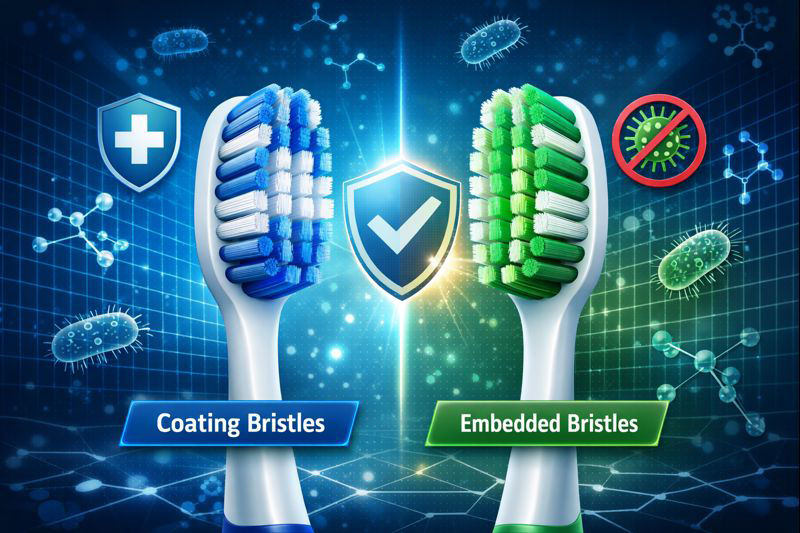
Antibacterial Coating Technology Explained
How Antibacterial Coating Works
In this technology, manufacturers coat the bristles with an antimicrobial agent after forming them, providing surface protection against bacteria. Common agents include silver ions or antibacterial polymers designed to disrupt bacterial cell activity.
The coating forms a thin protective layer intended to slow bacterial growth during early use.
Advantages of Coated Antibacterial Bristles
- Lower production cost
- Faster implementation on existing bristle lines
- Immediate antibacterial effect upon first use
These factors make coating technology attractive for entry-level or promotional toothbrush products.
Limitations of Coating Technology
However, coatings face durability challenges. Daily brushing friction, toothpaste abrasives, and repeated rinsing gradually wear away the antibacterial layer. Over time, the effectiveness diminishes, sometimes well before the toothbrush’s recommended replacement cycle.
From a compliance standpoint, coating uniformity and wear consistency can also be harder to control at scale.
Embedded Antibacterial Bristles Technology
How Embedded Technology Works
Embedded antibacterial bristles technology integrates antimicrobial agents directly into the bristle material during extrusion. Instead of sitting on the surface, the antibacterial component becomes part of the filament structure.
As the bristle wears naturally, antibacterial properties remain active throughout its lifespan.
Key Benefits of Embedded Technology
- Long-lasting antibacterial performance
- More consistent effectiveness over time
- Reduced risk of surface degradation
- Better alignment with premium product positioning
In embedded technology, the antibacterial function is built into the material itself. For this reason, manufacturers often use it in higher-end adult and travel toothbrushes designed for long-term use.
Coating vs Embedded: Which Antibacterial Bristles Technology Performs Better?
When comparing antibacterial bristles technology options, the decision comes down to usage duration, quality positioning, and risk tolerance.
| Factor | Coating Technology | Embedded Technology |
|---|---|---|
| Antibacterial lifespan | Short to medium | Long-term |
| Wear resistance | Lower | Higher |
| Cost | Lower | Moderate |
| Manufacturing complexity | Simple | Advanced |
| Premium suitability | Limited | Strong |
For manufacturers targeting professional buyers, embedded antibacterial bristles technology often offers a clearer competitive advantage and fewer post-market performance concerns.
Beyond technical considerations, manufacturers widely use antibacterial bristles technology in products designed for specific environments. For example, antibacterial toothbrushes created for travel, such as the antibacterial travel toothbrush, focus on hygiene and portability rather than a single antibacterial mechanism.
Safety, Compliance, and Market Expectations
Modern buyers increasingly scrutinize material safety and regulatory alignment. Embedded antibacterial solutions typically offer better stability, reducing concerns about coating flaking or uneven degradation.
Even though antibacterial toothbrushes are not medical devices, responsible manufacturers follow material guidance from organizations like the American Dental Association.
Choosing the Right Antibacterial Bristles Technology
No single solution works best in every case; the right choice depends on the product strategy.
- For cost-sensitive markets or short-term use: coating technology may suffice
- For premium, travel, or long-life toothbrushes: embedded antibacterial bristles technology offers superior consistency
As consumer awareness grows, the demand for durable, proven antibacterial performance will continue to rise. Brands that understand the technical differences behind antibacterial bristles technology can build stronger trust with buyers. This understanding also helps reduce complaints and compete more effectively in the oral care market.