Introduction
In recent years, global oral care preferences have been quietly shifting. One of the most noticeable trends is the growing demand for non-mint toothpaste. Mint flavor has long dominated the toothpaste category worldwide. However, consumers across regions are increasingly exploring alternative flavors that better match cultural preferences, sensory sensitivity, and lifestyle habits.
The rise of non-mint toothpaste is not just a niche movement. It reflects deeper regional differences in taste expectations and oral care behavior. Asia, the Middle East, and Europe each show unique adoption patterns. Tradition, dietary culture, and even climate conditions shape these patterns.
Understanding these differences is essential for oral care brands aiming to expand globally or localize their product strategy.
Non-mint toothpaste Market Overview in Asia, Middle East, and Europe
The global non-mint toothpaste market is expanding steadily. Consumers are increasingly looking for gentler, more diverse, and more inclusive oral care options. Unlike traditional mint-heavy formulas, non-mint variants include fruity, herbal, neutral, and even dessert-inspired flavors.
From a commercial perspective, brands that diversify beyond mint are gaining stronger traction in emerging and mature markets alike. You can explore a curated selection of oral care solutions and discover different toothpaste options.
According to the American Dental Association, toothpaste effectiveness depends mainly on active ingredients rather than flavor. This allows manufacturers to innovate while maintaining oral health standards.
Asia Market: Non-mint toothpaste Cultural Flavor Diversity and Functional Demand
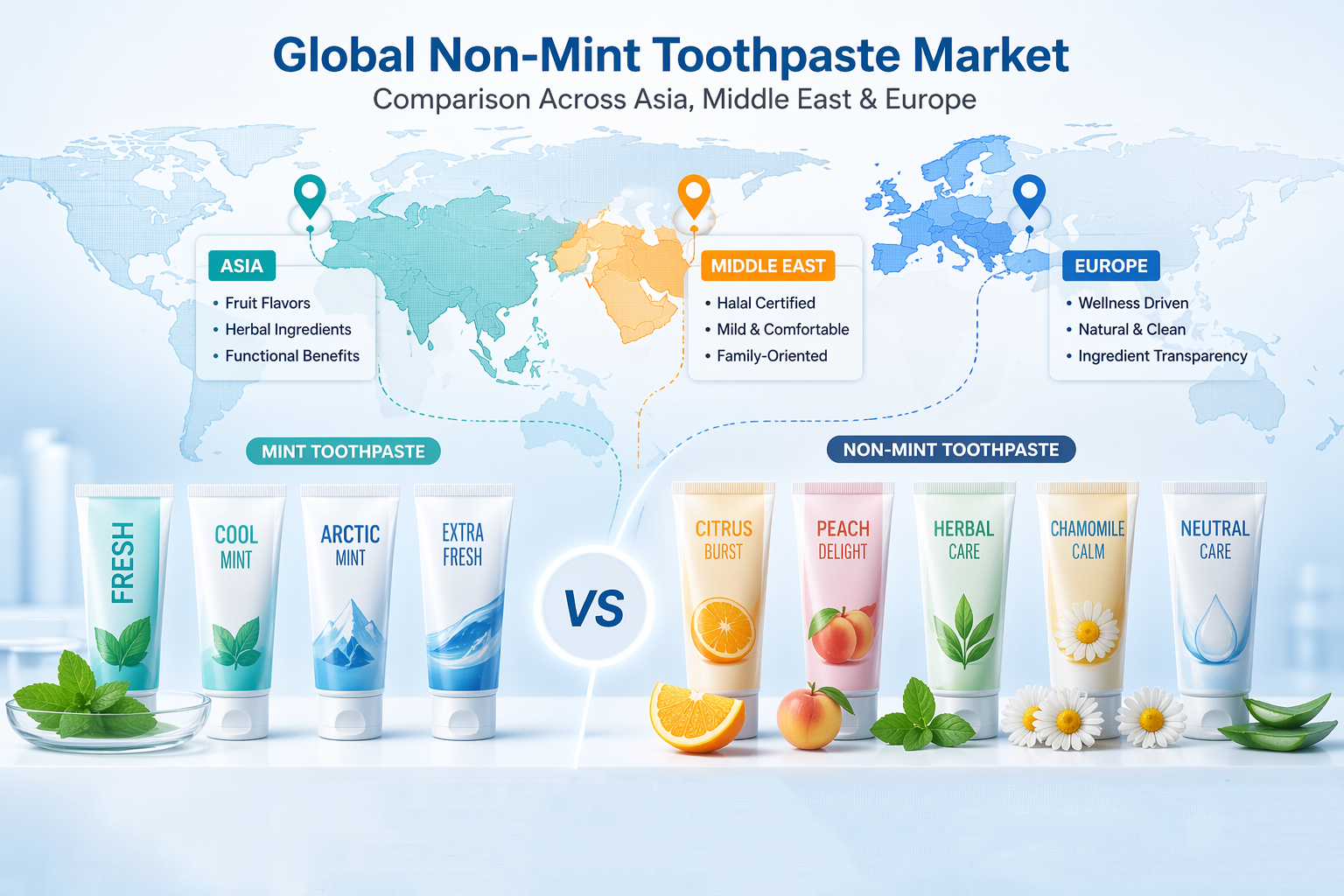
In Asia, the acceptance of non-mint toothpaste is particularly high. This is because herbal and fruit-based flavors are common in the local culture. Markets such as Japan, South Korea, and China have long embraced oral care products beyond traditional mint flavors.
Consumers in this region often prefer mild or functional flavors like green tea, citrus, or herbal blends. Sensitivity is another key driver—many users find strong mint too intense, especially children and older adults. As a result, brands often position mint-free toothpaste as a family-friendly or sensitivity-friendly option.
In addition, Asia’s innovation-driven beauty and personal care industry encourages experimentation. This makes the region one of the fastest-growing markets for a wider range of flavors in oral care.
Middle East Market: Non-mint toothpaste Halal Compliance and Sensory Comfort
In the Middle East, non-mint toothpaste adoption is influenced by cultural preferences and religious considerations. Many consumers prefer milder oral care products. These products avoid strong cooling sensations, especially during fasting periods such as Ramadan.
Another important factor is halal compliance. Products must align with ingredient transparency and ethical manufacturing standards, which encourages brands to reformulate toothpaste with cleaner, simpler ingredient lists.
Here, mint-free toothpaste often includes flavors such as cardamom, herbal extracts, or neutral profiles. These formulas help reduce sensory intensity while maintaining freshness. This makes oral care more comfortable throughout the day, particularly in hot climates where strong mint can feel overpowering.
Europe Market: Non-mint toothpaste Wellness Trends and Ingredient Transparency
Europe presents a different dynamic. Wellness trends, sustainability awareness, and ingredient sensitivity are closely driving the demand for non-mint toothpaste.
European consumers are increasingly cautious about synthetic additives, strong flavoring agents, and unnecessary chemical complexity. As a result, mild or flavor-neutral toothpaste options are gaining popularity, especially among users with sensitive oral conditions.
In this region, brands often position mint-free toothpaste within the “clean beauty” or “minimalist oral care” category. Brands that emphasize transparency and functional simplicity tend to perform better. Additionally, European regulations encourage strict ingredient disclosure, reinforcing consumer trust in alternative formulations.
Why Non-Mint Toothpaste Is Becoming a Global Trend
Across all three regions, the rise of non-mint toothpaste signals a broader shift in consumer behavior: personalization. Modern users are no longer satisfied with a one-flavor-fits-all approach. Instead, they expect oral care products to align with their sensory preferences, health needs, and cultural identity.
This trend also shows that oral care routines are becoming more diverse. Brands are expanding beyond traditional mint dominance. They are targeting new market segments, from sensitive teeth solutions to child-friendly formulations.
Conclusion
The global growth of non-mint toothpaste highlights how oral care is becoming more culturally adaptive and consumer-focused. Asia leads with flavor innovation, the Middle East prioritizes mildness and compliance, while Europe emphasizes transparency and wellness-driven formulations.
For oral care manufacturers and brands, understanding these regional differences is essential for product development and market positioning. As consumer expectations continue to evolve, non-mint options are no longer just alternatives. They are becoming a key part of global oral care.