Toothpaste is no longer just a basic hygiene product. Today, it has become a carefully evaluated consumer choice influenced by marketing, science claims, and ingredient transparency. Among all decision factors, toothpaste ingredients play a central role in shaping trust, preference, and ultimately purchasing behavior. Consumers are increasingly reading labels, comparing formulas, and making decisions based on perceived safety and effectiveness.
As competition grows in oral care, brands that understand toothpaste ingredients gain a stronger market position.
Toothpaste Ingredients and Consumer Trust
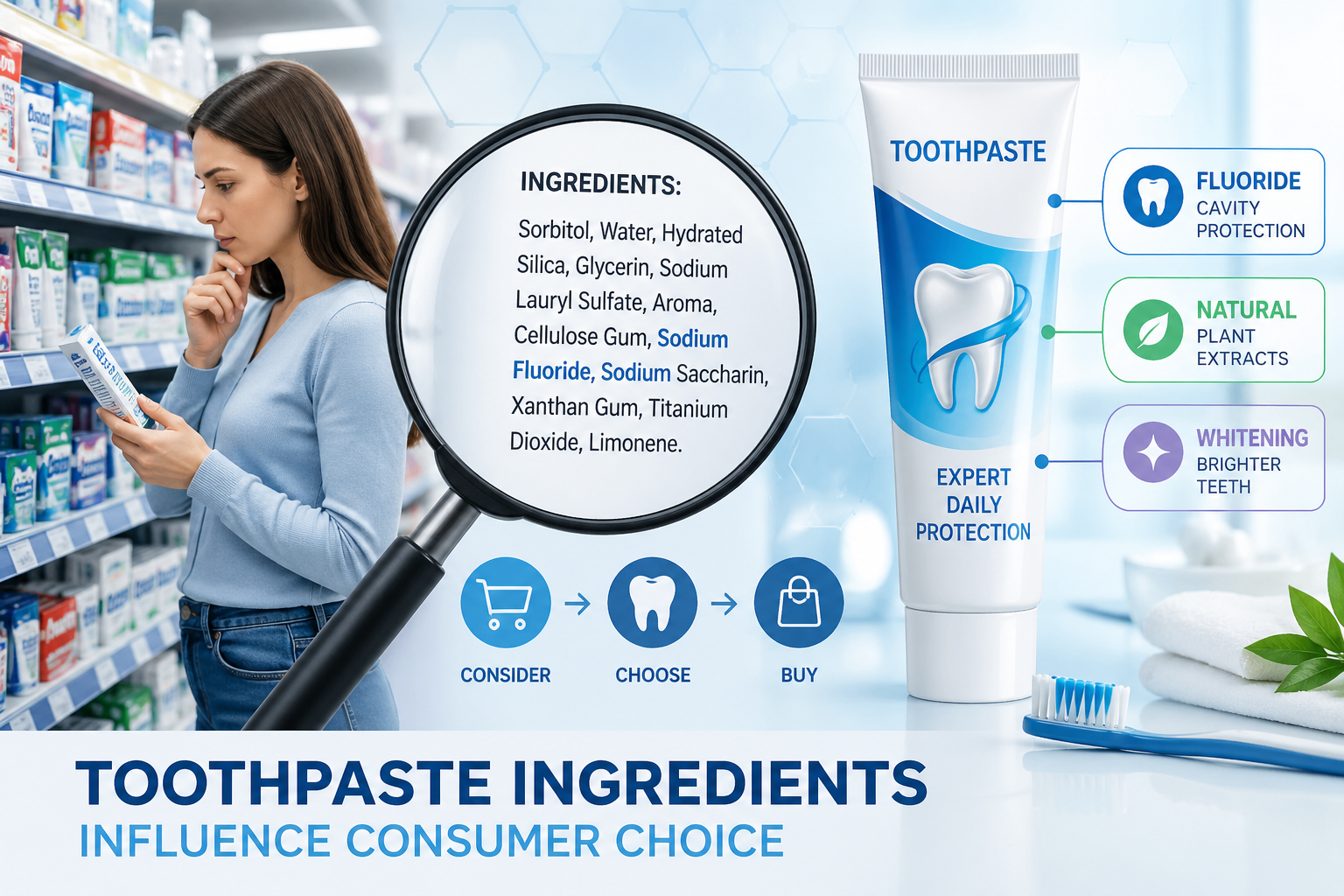
The first interaction a consumer has with a toothpaste product often starts with the ingredient list. This is where trust is either built or lost.
Modern buyers are more informed than ever. Many actively avoid ingredients like artificial sweeteners, parabens, or excessive abrasives. Instead, they prefer formulations that highlight fluoride balance, hydroxyapatite, or natural extracts. This shift reflects a broader demand for transparency.
According to the American Dental Association, fluoride is one of the most effective ingredients for cavity prevention. It also helps build consumer confidence in clinically backed formulations.
When consumers see familiar or research-backed oral care ingredients, they associate the product with credibility. On the other hand, unclear or overly complex ingredient lists may trigger hesitation or rejection.
For brands, simplifying communication around oral care ingredients can significantly increase purchase intent.
Toothpaste Ingredients in Marketing Positioning
From a marketing perspective, toothpaste ingredients are not just functional components; they are storytelling tools. Brands often highlight key features such as “whitening agents,” “enamel protection formulas,” and “natural botanical extracts.” This helps their products stand out on crowded shelves..
This positioning directly influences consumer perception of value. Even when performance differences are minimal, perceived benefits can drive purchasing decisions.
Consumers often compare ingredient claims with visible product categories. For example, shoppers browsing professional oral care ranges such as OralGos’s toothpaste collection often compare products carefully. They check whether toothpaste ingredients match their oral health goals, such as sensitivity relief or stain removal.
At this stage, product formulations become emotional triggers. A product labeled “gentle whitening with an enamel-safe formula” can perform better than a similar product. This is often due to clearer ingredient messaging.


Toothpaste Ingredients and Perceived Performance
The relationship between perception and performance is critical. Many consumers believe that stronger foaming agents equal better cleaning power, even though this is not always true.
This is where toothpaste ingredients directly influence expectations. Consumers often see ingredients such as sodium lauryl sulfate (SLS), fluoride, or silica as indicators of effectiveness. However, without proper education, these interpretations can be misleading.
When consumers understand how toothpaste ingredients actually function, they make more rational and confident decisions. This is why educational content has become a key strategy for oral care brands.
For example:
- Fluoride strengthens enamel and prevents decay
- Silica acts as a gentle abrasive for stain removal
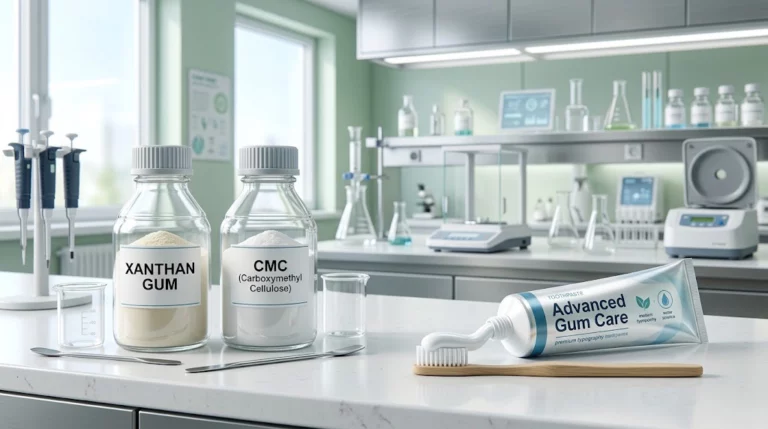
- Xylitol helps reduce cavity-causing bacteria
By simplifying these explanations, brands can bridge the gap between science and consumer understanding of ingredients.
Consumer Psychology Behind Toothpaste Ingredients
Beyond science, psychology plays a major role in purchasing behavior. Label design, health trends, and social proof strongly influence consumers.
“Clean beauty” and “natural oral care” movements have reshaped expectations. Even when clinical evidence supports certain synthetic ingredients, consumers may still prefer natural alternatives due to perceived safety.
This emotional decision-making process means toothpaste ingredients often function as trust signals rather than purely functional components.
Marketing language such as “chemical-free,” “herbal blend,” or “biocompatible formula” can increase conversion rates. This happens even when the actual differences in toothpaste ingredients are minimal.
Brands that understand this psychological factor and keep their claims scientific build stronger trust and long-term loyalty.
How Brands Can Optimize Ingredient Communication
To effectively influence purchasing behavior, oral care brands must balance clarity, science, and emotional appeal.
Here are three key strategies:
- Simplify ingredient explanations
- Avoid overly technical language and instead focus on benefits.
- Highlight functional groups of ingredients
- Group toothpaste ingredients by purpose (whitening, protection, sensitivity).
- Educate rather than overclaim
- Consumers respond better to honest explanations than over-the-top promises.
For example, instead of simply listing ingredients, brands can explain their benefits. Each group of toothpaste ingredients supports daily oral health in a different way.
Conclusion
In today’s competitive oral care market, toothpaste ingredients are more than just a formulation detail. They strongly influence consumer behavior. From trust building and marketing positioning to psychological perception, ingredients shape how consumers evaluate and select products.
Brands that clearly communicate the role and benefits of toothpaste ingredients can significantly improve engagement, trust, and conversion rates. Consumers are increasingly demanding transparency and science-backed solutions. Ingredient storytelling will remain an important factor in purchasing decisions.
Ultimately, understanding toothpaste ingredients is not just about chemistry but about understanding people.