If you’ve ever struggled to get your child into the bathroom twice a day, you’re not alone. Many parents ask the same question: why kids hate brushing their teeth so much. What should be a simple daily habit often turns into negotiation, resistance, or even full-blown tantrums.
The truth is, kids don’t naturally understand why oral hygiene matters. To them, brushing can feel boring, uncomfortable, or even unnecessary. Add in sensory sensitivity, poor routines, or unappealing toothbrush designs, and the habit becomes even harder to build.
When you understand why kids resist brushing, you can start turning it into a smoother and even enjoyable routine.
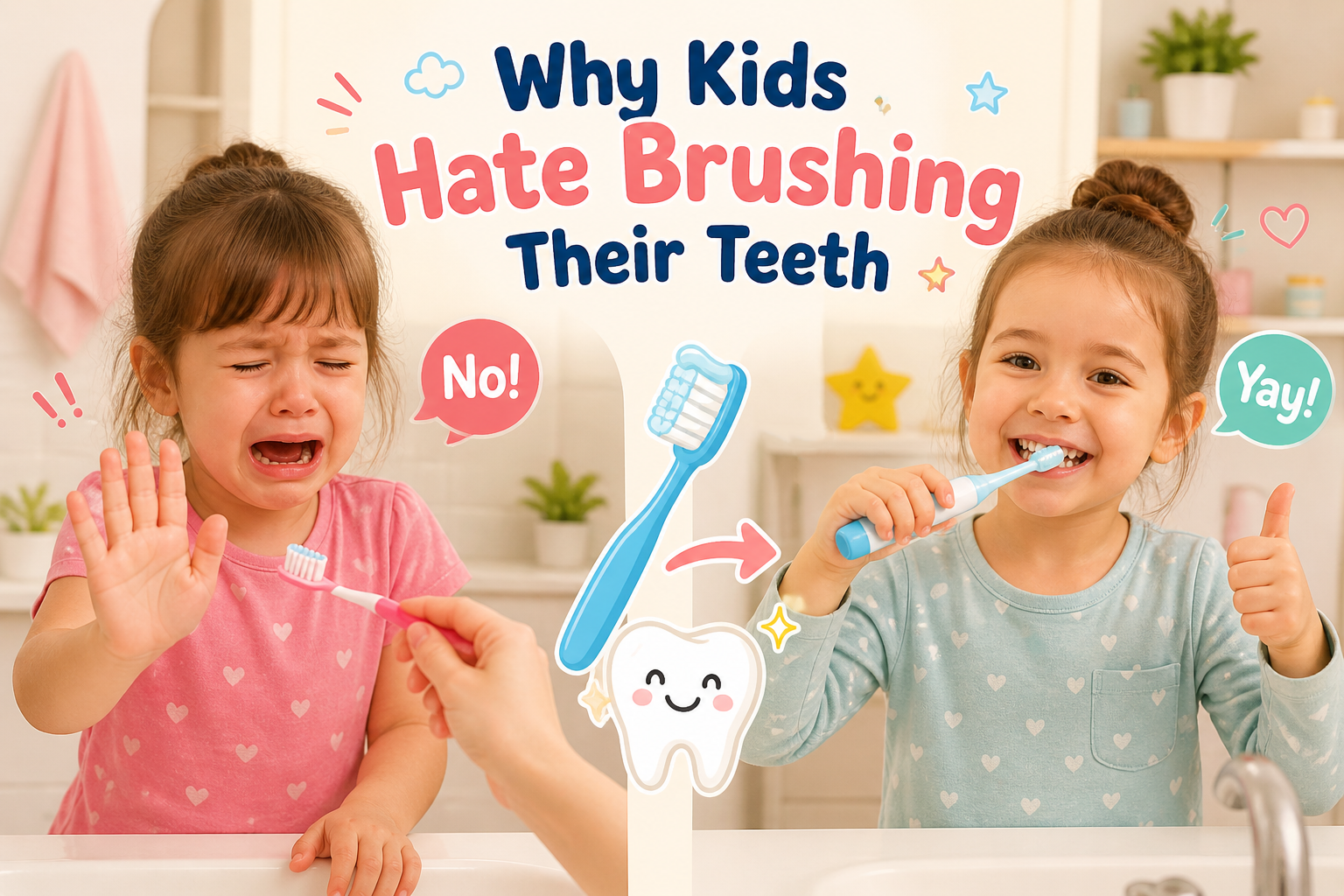
Why kids hate brushing teeth
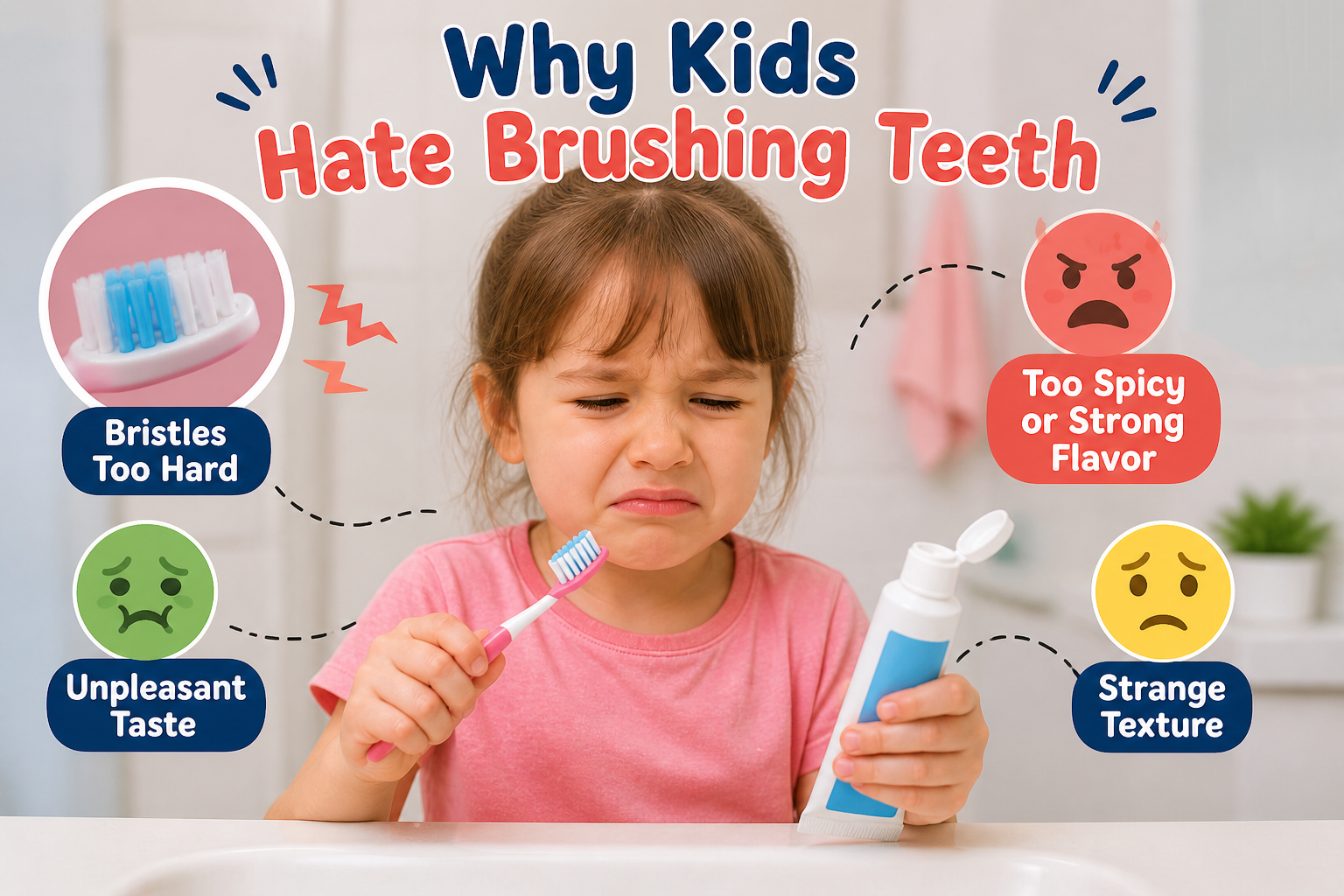
This struggle usually comes from a few everyday habits and behaviors. When parents understand them, they can handle the situation better instead of forcing kids to comply.
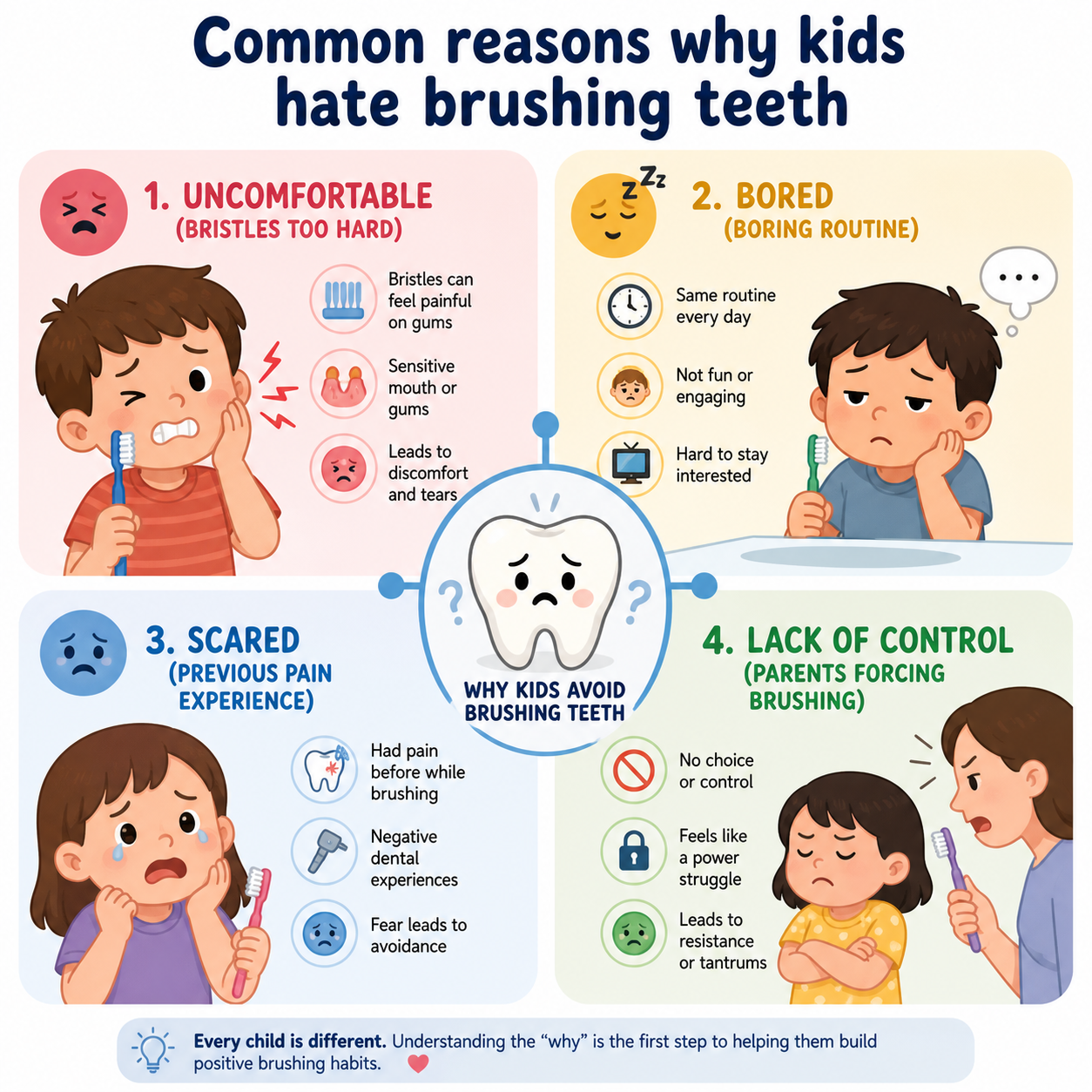
First, sensory discomfort is a major reason. Many children dislike the texture of bristles or the foamy feeling of toothpaste. Strong mint flavors can feel overwhelming, especially for younger kids. This makes brushing feel more like an unpleasant sensory experience than a routine task.
Second, lack of control is another major factor. Kids often resist activities that are “done to them.” When parents fully control brushing, children may push back to assert their independence.
Third, boredom is a hidden trigger. Brushing teeth does not provide instant reward or excitement. Compared to playtime or screen time, it feels like a chore with no visible payoff.
Finally, irregular early routines can reinforce resistance. Without a gentle and consistent start, kids may end up disliking brushing for a long time instead of just going through a short phase.
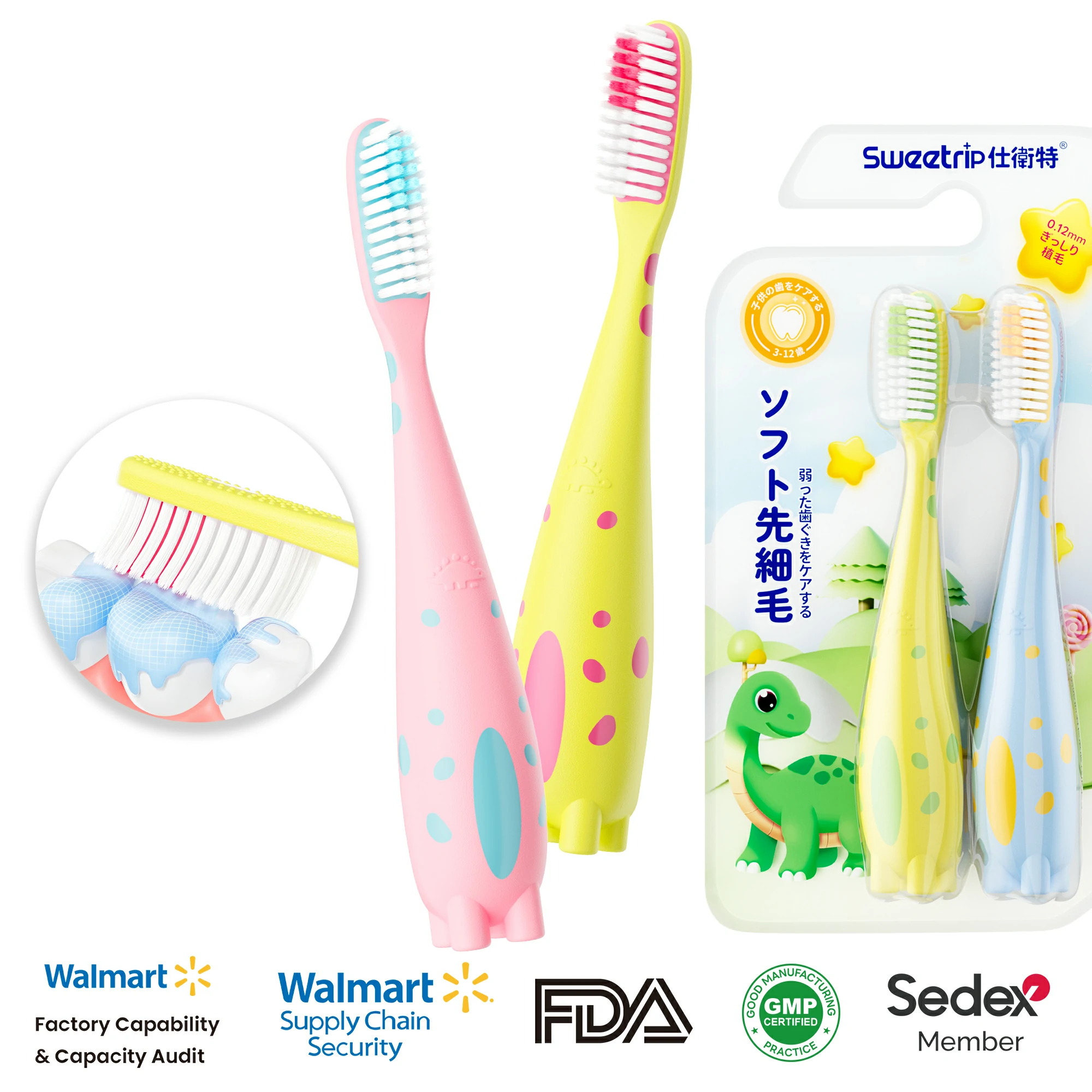
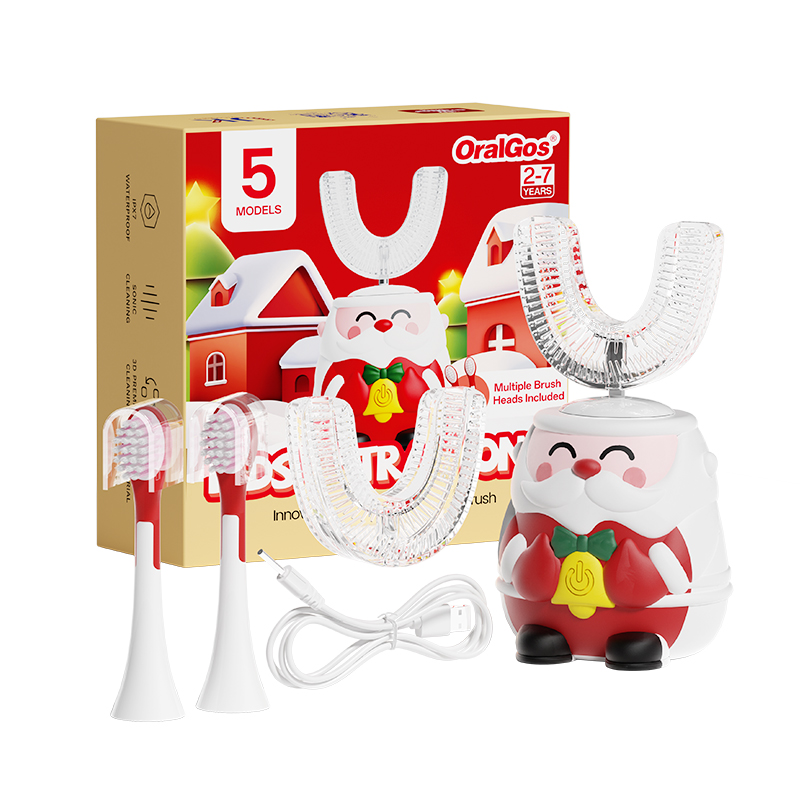
Parents can make this easier by choosing kid-friendly tools. Soft-bristled options like a playful kids toothbrush can make brushing more comfortable. A kids electric toothbrush can also make the experience more interactive.
Common reasons why kids hate brushing teeth
Not only senses or behavior matter; kids can also resist more because of their emotions and environment.
One key issue is fear or discomfort from a bad experience. If a child once felt pain from cavities or gum sensitivity, they may link brushing with discomfort. This creates avoidance behavior.
Another reason is poor technique. When brushing feels difficult or inefficient, children may give up quickly. This is especially true for younger kids who lack fine motor skills.
Sometimes parents don’t mean to, but they turn brushing into a negative experience by using pressure or punishment. This increases emotional resistance over time, making kids hate brushing teeth even more strongly.
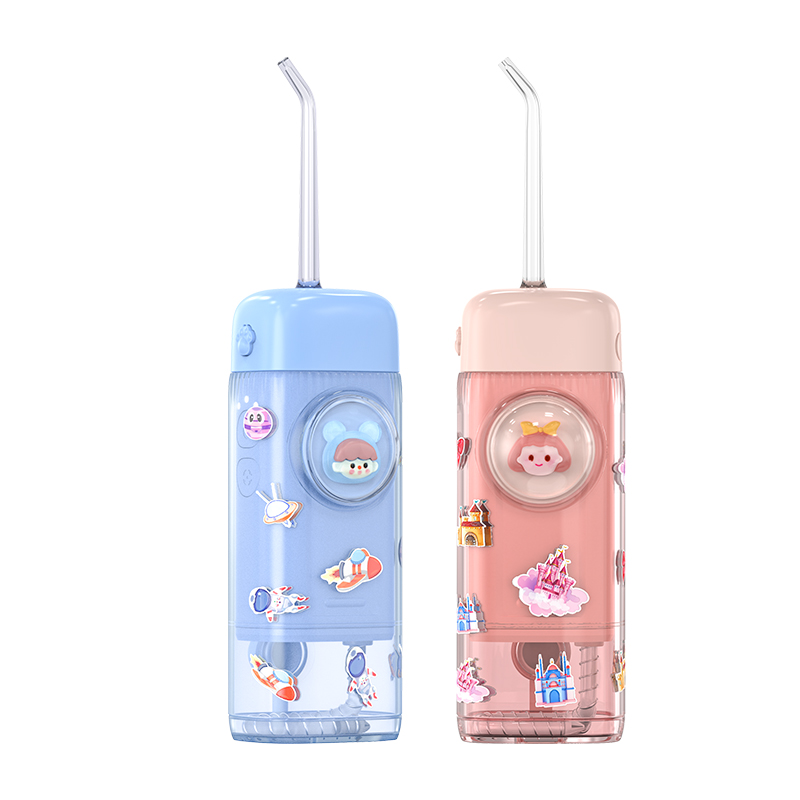
Finally, oral care tools themselves matter more than many realize. A bulky or harsh toothbrush can discourage regular use. In contrast, kid-friendly designs and gentle cleaning systems can make brushing much easier for children. For example, a kids water flosser can reduce resistance and make cleaning easier for children.
How to make brushing easier and more enjoyable
Solving this issue requires a mix of psychology, habit-building, and the right tools.
Start by making brushing predictable. Set fixed times every morning and night so it becomes part of the daily rhythm. Children feel more secure when routines are stable.
Next, give children a sense of control. Let them choose their toothbrush, toothpaste flavor, or even which song plays during brushing time. Small choices can reduce resistance significantly.
Making it into a game also works well. Timers, brushing apps, or reward charts can turn a boring task into a mini game. This helps shift the mindset from “I have to do this” to “I can complete this challenge.”
Most importantly, choose tools designed for children. Soft bristles, ergonomic handles, and fun designs can make a noticeable difference in compliance. Parents who consistently apply these strategies often find that the phase where kids hate brushing teeth gradually fades.
The American Dental Association recommends that children brush twice a day with fluoride toothpaste under proper supervision. This helps kids keep their teeth clean and avoid cavities. Building this habit early is essential for long-term oral health.
Conclusion
When children resist brushing, it’s rarely about laziness. Discomfort, lack of control, or a poor experience are usually the reasons. Once parents understand why kids hate brushing teeth, they can shift from frustration to strategy.
With steady routines, fun tools, and a more child-centered approach, brushing can shift from a daily battle to an easy habit.
The goal isn’t just clean teeth today, but building lifelong habits that protect oral health in the future.