
Many people think oral health problems are obvious—pain, swelling, or severe discomfort. However, gum disease typically begins with minimal or no noticeable symptoms. In its early stages, it can develop without noticeable pain, which is why so many people miss the warning signs. Understanding these subtle changes is the key to preventing long-term damage.
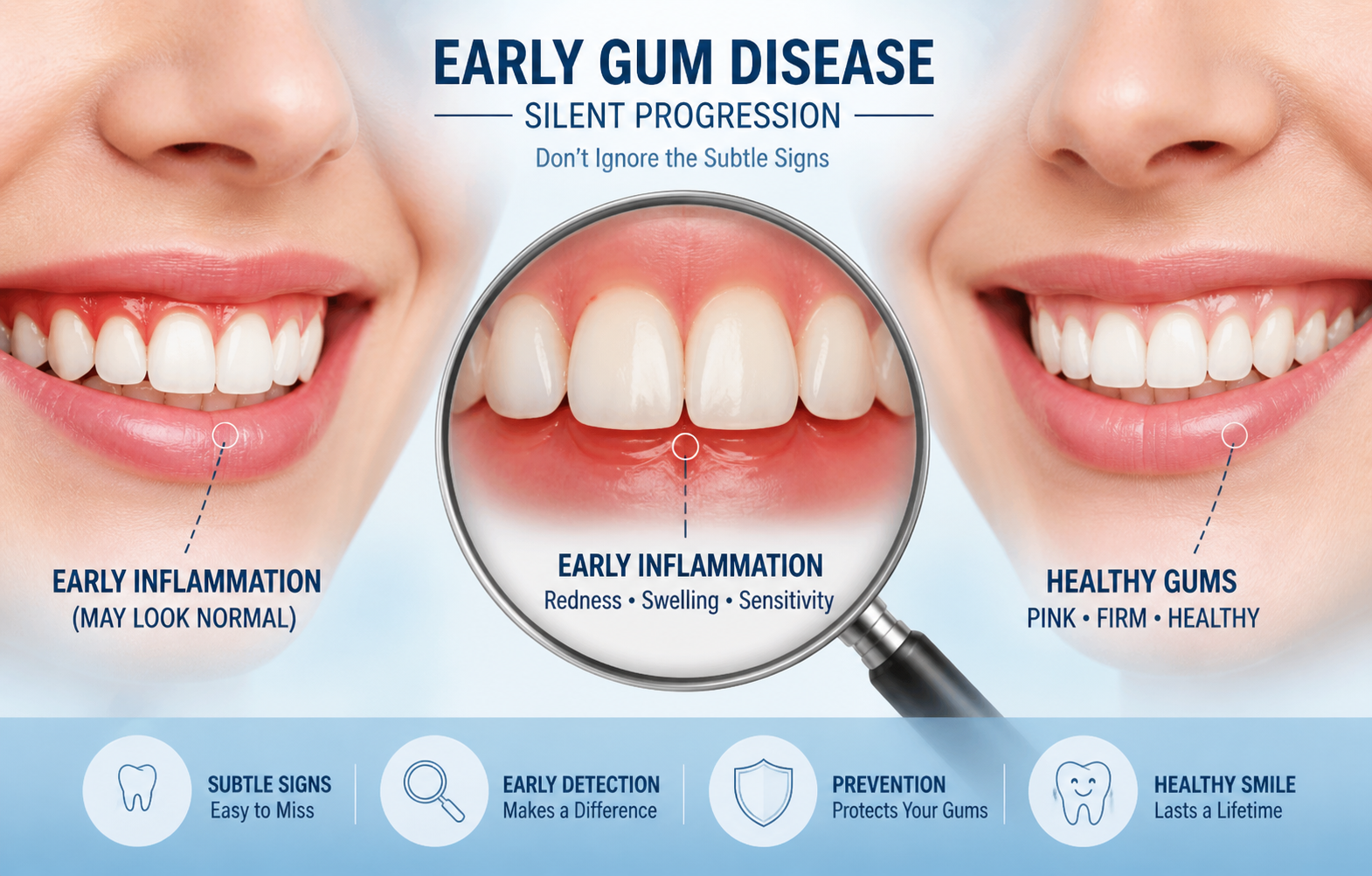
Early Signs of Gum Disease You Should Never Ignore
Early gum disease (also known as gingivitis) is reversible, but only if caught in time. The challenge is that it rarely announces itself loudly.
Why gum disease starts silently
The early stage of gum disease begins when plaque builds up along the gumline. This bacteria-laden film irritates the gums, but the body’s response is mild at first. Instead of pain, you might notice slight redness or sensitivity that is easy to overlook in daily brushing routines.
At this stage, the condition is still manageable. However, if left untreated, the inflammation can spread to deeper supporting structures of the teeth.
Small changes that matter
Some early signals include:
- Slight gum redness
- Occasional bleeding when brushing
- Mild bad breath that doesn’t go away
- Gum tenderness when eating harder foods
These signs may seem minor, but they are often the first indicators of developing gum problems.
Common Silent Symptoms of Gum Disease
The tricky part about gum disease is that it doesn’t always hurt in the beginning. Instead, it quietly affects your gums over time.
Bleeding gums during brushing
One of the earliest and most overlooked symptoms is bleeding gums. Many people assume they are brushing too hard. In reality, it is often a sign of inflammation caused by gum infection.
Persistent bad breath
Bad breath that doesn’t improve even after brushing or using mouthwash can indicate bacteria trapped below the gumline. This is a common but ignored warning sign of early gum problems.
Gum recession and sensitivity
Your teeth may start looking slightly longer, or you may feel sensitivity near the gumline. These signs could mean your gums are beginning to recede. This is another subtle but important sign of worsening gum health.
How to Prevent Gum Disease Before It Progresses
Prevention is far easier than treatment. The goal is to remove plaque before it causes inflammation and contributes to gum problems.
Daily brushing with a proper technique is essential. A well-designed manual toothbrush, like those in the OralGos range, can remove plaque well without harming gums.
For deeper cleaning, especially between teeth and along the gumline, an electric toothbrush is often more efficient. For example, you can use one from the OralGos electric toothbrush collection.
Interdental cleaning also plays a major role. Water flossers help remove debris from hard-to-reach areas. They also reduce the risk of gum disease. This includes models in the OralGos water flosser collection.
Consistency matters more than intensity. Gentle, regular cleaning is far more effective than aggressive brushing that may damage gum tissue.

When to Seek Help for Gum Disease
Even if symptoms seem minor, it’s important not to ignore them. Early detection of gum disease can prevent more serious issues like periodontitis, tooth mobility, or bone loss.
According to the American Dental Association, regular dental checkups and professional cleanings are key. They keep gums healthy and prevent disease from getting worse.
If you notice persistent bleeding, swelling, or gum changes lasting more than a week or two, it is time to consult a dental professional. Early intervention can completely reverse early-stage gum disease and restore gum health.
Final Thoughts
The biggest danger of gum disease is not its severity at the beginning, but its silence. By the time pain appears, the condition may already be advanced. Paying attention to small changes—bleeding gums, bad breath, or sensitivity—can make all the difference.
With proper daily care, the right tools, and regular dental visits, gum disease is highly preventable. Your gums often speak quietly; the key is learning how to listen before the problem grows louder.