Bright colors and cartoons make children’s dental products easy to spot. However, choosing between a kids toothbrush and an adult version involves much more than aesthetic appeal or physical dimensions. Understanding the structural and functional differences is vital for maintaining optimal oral hygiene at every stage of life.
The Anatomy of a Kids Toothbrush
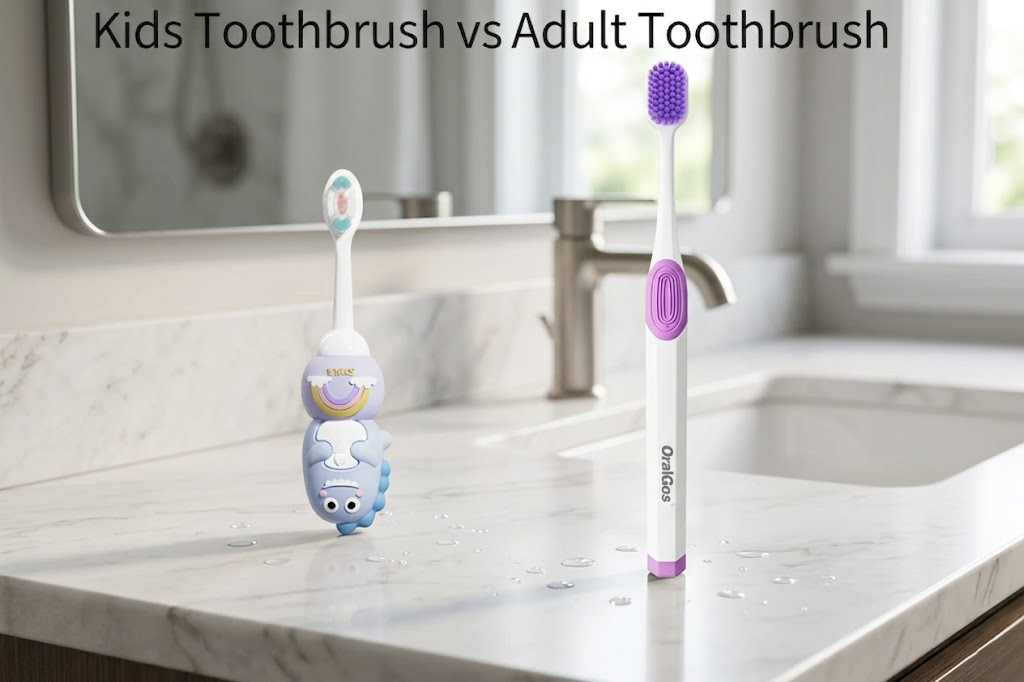
The primary function of a kids toothbrush is to accommodate the unique environment of a developing mouth. Children have smaller arches, thinner tooth enamel, and more sensitive gingival tissues compared to adults. Manufacturers engineer these brushes with specific mechanical properties.
- Bristle Texture and Composition: Most brushes for children utilize “extra-soft” nylon bristles. Because primary teeth (baby teeth) have thinner enamel, they are more susceptible to abrasion.
- Head Shape: Designers round and taper the brush head to protect soft tissues in small spaces.
- Handle Ergonomics: Unlike the sleek handles of adult brushes, children’s versions often feature bulky, non-slip grips. This design supports “palmar grip” capabilities because young children lack the fine motor skills for a “pen grip”.
Parents want to build a solid dental routine for their children. Selecting a high-quality kids toothbrush is the essential first step.
Why Adults Need Different Tools
As we transition into adulthood, our oral anatomy changes significantly. Permanent teeth are larger, and the risk of gum disease increases. Adult brushes work harder to remove tough plaque. Their design helps them reach deep into the back of the mouth.
Adult brushes use multi-level bristles and angled tips. These features help clean deep between tight permanent teeth. Kids’ brushes focus on keeping the mouth safe while building a routine. Adult brushes use a stronger design to remove stains and plaque effectively.
Key Technical Differences: Kids Toothbrush vs. Adult Models
When comparing a kids toothbrush to an adult model, several technical factors stand out that impact cleaning efficacy:
- Bristle Count: Adult brushes generally have a higher density of bristle tufts to cover a larger surface area.
- Flexibility: Adult brushes use flexible necks to reduce pressure on the gums. In contrast, a kids toothbrush features a rigid design to handle the biting reflex common in young children.
- Safety Standards: The American Dental Association recommends replacing toothbrushes every three to four months. A kids toothbrush may need more frequent replacement if a child chews on the head. Worn bristles clean less effectively and can harbor harmful bacteria.
Can an Adult Use a Kids Toothbrush?
Technically, adults can use a kids toothbrush, though dental experts rarely recommend it as a permanent solution. The soft bristles are gentle, but the small head size hinders efficiency. It struggles to clean the large surface area of adult molars effectively. You must brush much longer than two minutes to remove the same amount of plaque.
Conversely, dental professionals strongly advise against children using adult toothbrushes. The bristles are typically too firm for primary teeth, and the oversized head can cause gagging or tissue trauma in a small mouth.
The Importance of Age-Appropriate Selection
Choosing the right tool is about more than just comfort; it is about the “Science of the Smile.” Using a kids toothbrush ensures that the mechanical action of brushing matches the biological developmental stage of the user. A kids toothbrush aims for gentle plaque removal without causing irritation. For adults, the primary goals shift to preventing calculus build-up and gingivitis.
Conclusion
The differences between a kids toothbrush and an adult version stem from three key areas. These include ergonomics, material science, and developmental biology. Select age-appropriate tools and follow guidance from the American Dental Association. These steps ensure every family member maintains a healthy and functional smile.
Whether teaching a toddler or upgrading your own manual tool, remember this: size is only the beginning. Proper design and material science are equally essential for a healthy smile.