
Maintaining optimal oral hygiene during orthodontic treatment is a significant clinical challenge. Fixed braces have many tight spots, including brackets, wires, and bands. These areas easily trap food and plaque, making it hard to keep your teeth clean. If left unchecked, this buildup helps harmful bacteria grow quickly, leading to white spot lesions, tooth decay, and gum disease.
A frequent inquiry among orthodontic patients is: can you use an electric toothbrush with braces safely and effectively?
From a clinical standpoint, the short answer is yes. In fact, most experts agree that a power toothbrush is the best tool for cleaning all the hard-to-reach spots around your braces.
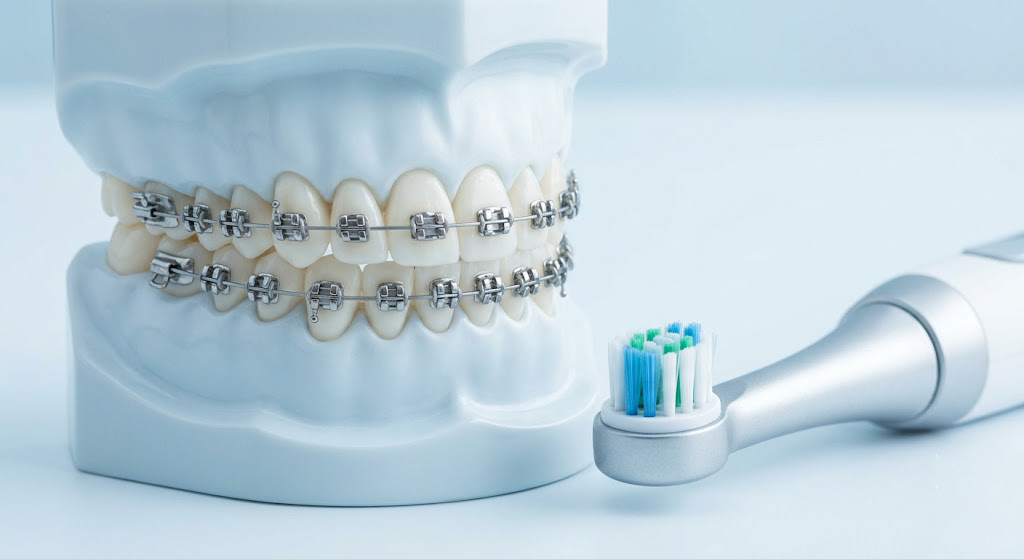
Why You Should Consider a Power Brush During Orthodontic Treatment
Manual brushing requires highly precise, meticulous technique to clean around orthodontic hardware effectively. Most patients struggle to maintain the necessary dexterity for the standard two-minute duration. This is where modern dental technology offers a distinct therapeutic advantage.
Enhanced Plaque Removal Efficacy
Clinical studies indicate that oscillating-rotating and sonic electric toothbrushes remove significantly more plaque than standard manual brushes. The fast vibrations of an electric brush break up plaque easily. They clean not only the flat surfaces of your teeth, but also the tight spots under the wires and around the brackets.
Automated Pressure Control
Brushing too hard with a manual brush is a common mistake. Over time, pushing too hard can make your gums recede and damage your tooth surface. Many good electric toothbrushes have built-in pressure sensors. These sensors light up or alert you if you push too hard, protecting your gums and your braces.
Can You Use an Electric Toothbrush with Braces Safely?
Many patients worry that an electric toothbrush might damage their braces. They fear the fast vibrations could break the wires or pop off the brackets.
Orthodontists use advanced dental adhesives to attach brackets to your teeth. Manufacturers formulate this special glue to withstand the intense pressure of daily chewing. If you place the hardware correctly, the micro-oscillations of a toothbrush head will not compromise this bond.
Therefore, when asking, can you use an electric toothbrush with braces, you can rest assured that it is entirely safe. To optimize your routine, selecting the correct equipment is vital. Utilizing a dedicated electric toothbrush equipped with an orthodontic brush head can radically improve your daily plaque control index.
These specialized heads use a smart bristle layout. The shorter center bristles avoid bumping the brackets. Meanwhile, the longer bristles on the outside safely wash away buildup near the gums.
Step-by-Step Clinical Brushing Technique for Orthodontic Patients
To maximize the therapeutic benefits of your power brush, a systematic approach must be followed. Simply placing the brush against the teeth is insufficient. Follow this clinically approved protocol:
1. The Angulation Method (45-Degree Rule)
- Above the Bracket: Angle the brush head at a 45-degree angle downward toward the top of the bracket. Allow the bristles to work into the space between the bracket and the gumline.
- Below the Bracket: Next, tilt the brush head upward at a 45-degree angle. This cleans the bottoms of your brackets and the biting edges of your teeth.
2. Systematic Quadrant Cleaning
Orthodontists recommend dividing the mouth into four separate quadrants. Spend at least 30 seconds on each quadrant. Clean the buccal (outer), lingual (inner), and occlusal (chewing) surfaces. Do not scrub; let the mechanical action of the brush do the work as you slowly guide it along the dentition.
Comprehensive Orthodontic Maintenance Beyond Brushing
An electric toothbrush is excellent for clearing away plaque. However, it still cannot clean the tight spaces between your teeth directly under the wires. To prevent cavities between your teeth and keep your gums healthy, you must maintain a complete daily care routine.
The American Dental Association (ADA) states that you must clean between your teeth daily. This regular cleaning removes plaque that toothbrushes simply cannot reach. For orthodontic patients, this requires specialized tools:
- Interdental Brushes: Tiny, cylindrical brushes designed to slide underneath the archwire and clean the lateral sides of each bracket.
- Floss Threaders or Orthodontic Floss: These special threads feature a firm tip to guide the floss past your wires. This design allows you to clean the sensitive gum spaces between your teeth without hurting yourself.
- Water Flossers: This excellent tool uses pulsing water pressure to flush out food and plaque from tight spots that normal toothbrush bristles cannot reach.
Conclusion: Maximizing Oral Health with Fixed Appliances
So, can you use an electric toothbrush with braces? Yes. Dentists strongly agree that switching to a power brush is the best choice for your oral health.
It removes more plaque and protects your gums from too much pressure. This makes it the perfect tool to keep your new smile healthy and bright. Use an electric toothbrush and clean between your teeth every day. This simple routine protects your enamel from weak spots, ensuring your teeth look bright and healthy when your braces come off.