Every daily routine begins and ends at the sink. For decades, traditional toothpaste squeezed from a collapsible plastic tube has been the unquestioned standard. However, the rise of eco-friendly living and waterless cosmetic innovations has introduced a modern challenger: chewable toothpaste tablets. Comparing toothpaste tablets vs traditional toothpaste brings clear differences in sustainability, travel convenience, ingredients, and cost into focus. Here is a comprehensive breakdown to help you decide which option belongs on your bathroom counter.
Understanding the Essentials: Toothpaste Tablets vs Traditional Toothpaste
Making the right choice starts with understanding how each product works.
What Are Traditional Toothpaste Paste Formulations?
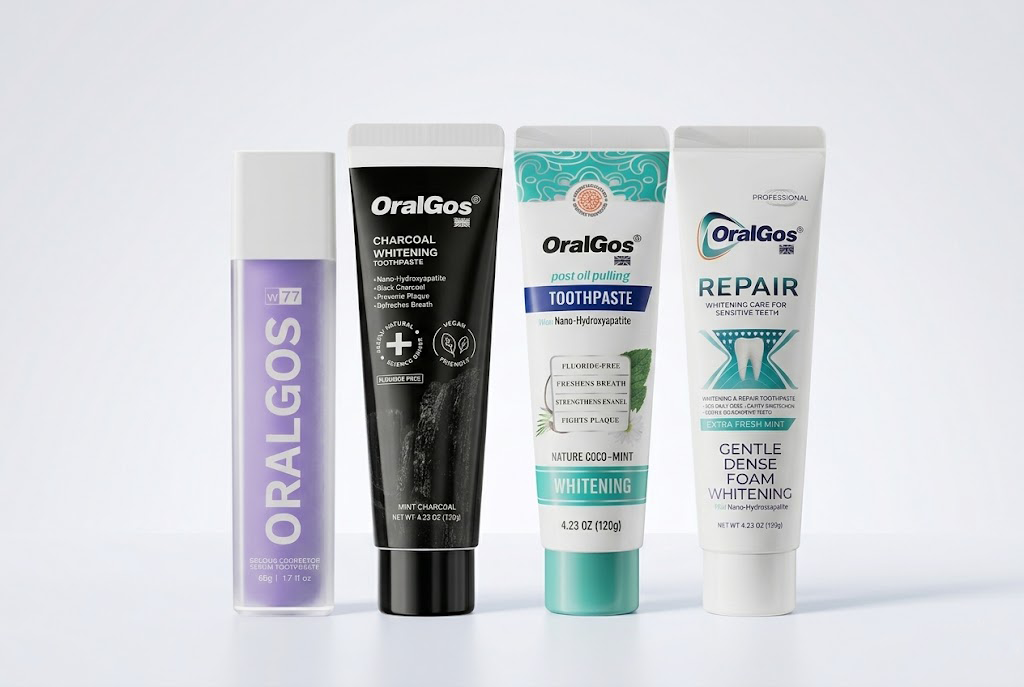
Traditional paste relies on a water-based emulsion stored in laminated plastic tubes. Water constitutes roughly 20% to 40% of standard paste formulations. To keep paste smooth and shelf-stable, manufacturers blend water with humectants, mild abrasives, binding agents, and preservatives. Common additives include glycerin, sorbitol, and hydrated silica.
Browse our complete line of toothpaste products to explore both daily pastes and chewable options.
What Are Chewable Toothpaste Tablets?
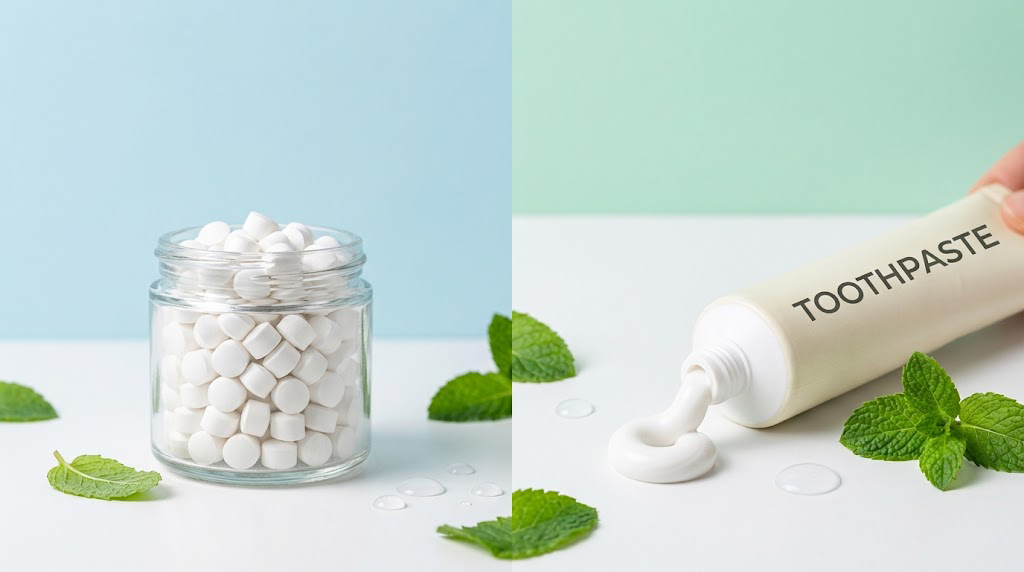
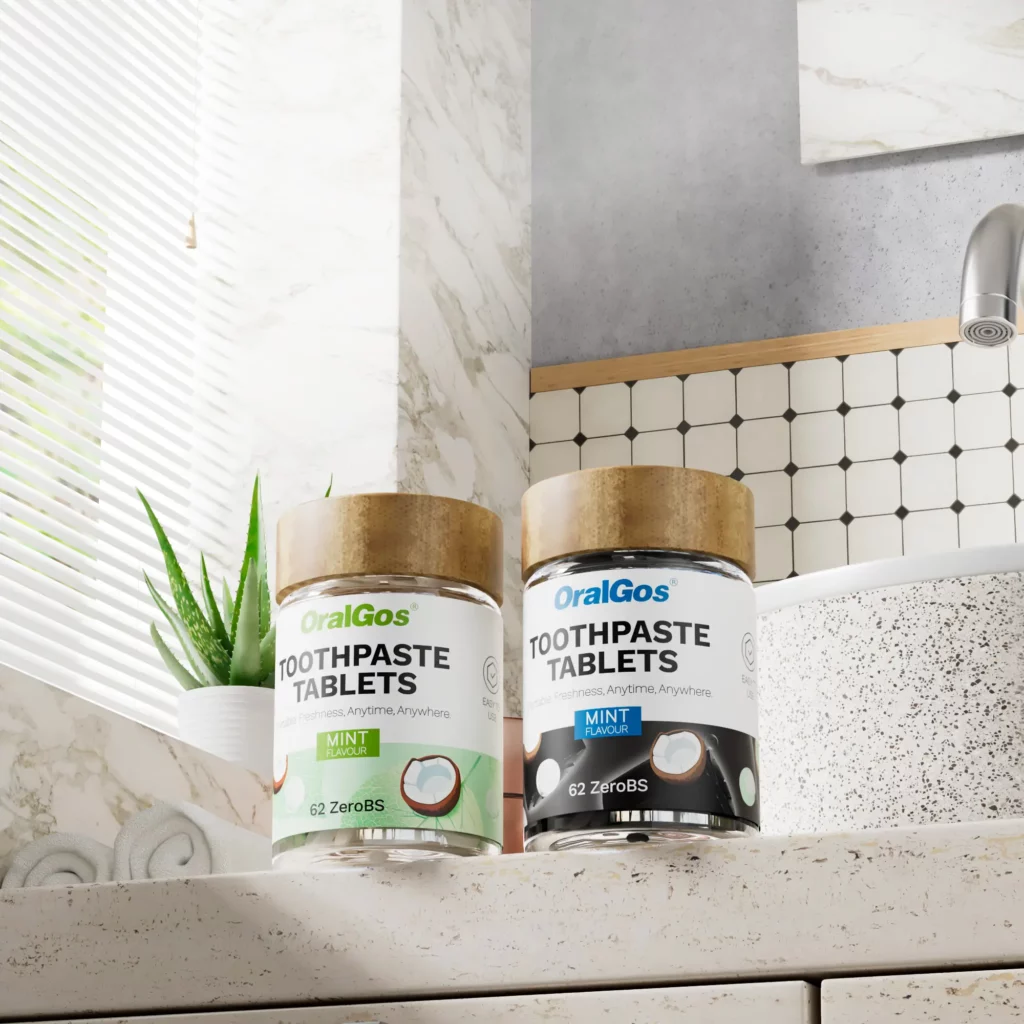
Toothpaste tablets combine concentrated powders into small, waterless bites. Skip the squeeze: simply pop a tablet in your mouth, chew it into a paste, and brush normally. Because they contain no liquid, chewable tabs eliminate the need for plastic tubes, synthetic preservatives, and artificial stabilizing gums.
Key Differences: Toothpaste Tablets vs Traditional Toothpaste
Comparing toothpaste tablets vs traditional toothpaste across key categories highlights how each format performs in daily life.
| Feature Category | Toothpaste Tablets | Traditional Toothpaste |
| Packaging & Eco-Impact | Glass jars, refill pouches, metal tins | Multi-layer plastic & aluminum tubes |
| Portability & Travel | TSA-friendly, zero liquids, lightweight | Subject to liquid size limits (under 100ml) |
| Dosing Precision | Pre-measured single dose per bite | Easy to over-apply onto bristles |
| Preservatives & Water | Waterless dry formula; minimal preservatives | High water content; requires preservatives |
| Initial Purchase Cost | Slightly higher per-unit upfront cost | Lower upfront mass-market price |
1. Environmental Impact and Packaging
The strongest argument in the debate between toothpaste tablets vs traditional toothpaste revolves around environmental footprint.
- Plastic Tube Waste: Globally, consumers throw over 1.5 billion plastic toothpaste tubes into landfills and oceans each year. Because these tubes fuse aluminum with multiple layers of plastic film, standard recycling facilities cannot process them.
- Sustainable Packaging: Brands typically package chewable tablets in recyclable glass jars, aluminum tins, or biodegradable paper refill pouches.
- Carbon Shipping Footprint: Liquid paste is heavy to transport because of its high water weight. Transporting lightweight, dry tablets reduces fuel consumption and carbon emissions across supply chains.
2. Portability, Travel, and Hygiene
For travelers and minimalists, chewable alternatives offer distinct lifestyle advantages:
- TSA and Airport Security Compliance: Carrying solid tablets eliminates liquid carry-on limits entirely. Solid tablets completely prevent messy luggage leaks caused by cabin pressure shifts.
- Precision Dosing: People routinely squeeze double the recommended amount of toothpaste onto their brushes. A tablet delivers an exact, pre-measured dose every time, preventing unnecessary product waste.
- Hygienic Shared Use: Sharing a traditional tube can transfer germs if the tube nozzle touches wet bristles. You can easily pour out single tablets without touching the rest or spreading germs.
3. Cleaning Performance and Dental Efficacy
When analyzing toothpaste tablets vs traditional toothpaste, oral health benefits remain the priority. Both options effectively remove dental plaque and freshen breath when paired with proper brushing technique.
Active Ingredients and Enamel Protection
- Fluoride: The American Dental Association (ADA) confirms that fluoride actively strengthens enamel and protects against tooth decay. Standard toothpastes routinely contain active fluoride formulations. Modern tablet manufacturers now also offer fluoride-infused options that meet these same standards.
- Remineralizing Alternatives: Many dry tablet formulas use biocompatible alternatives like Nano-Hydroxyapatite (nHAp) or Calcium Carbonate to repair enamel without synthetic additives.
Try Zerobs Natural Toothpaste Tablets for a natural, plastic-free clean that rivals traditional toothpaste.
Making the Choice: Which Should You Buy?
Choosing between toothpaste tablets vs traditional toothpaste comes down to your personal priorities and lifestyle habits.
Choose Toothpaste Tablets if:
- You are striving for a zero-waste, plastic-free bathroom.
- You travel frequently and need mess-free, TSA-friendly oral care.
- You prefer precise, pre-measured portions without messy tube residues.
Choose Traditional Toothpaste if:
- You prefer an instantly familiar texture and foam right out of the tube.
- You prefer the lowest upfront cost per ounce.
- You rely on specialized prescription formulas for severe clinical dental conditions.
Both options keep your smile clean, healthy, and plaque-free. Switching to waterless, chewable tablets offers a simple way to protect your teeth while reducing single-use plastic waste.