When you see a sleek tube of whitening toothpaste on a retail shelf, it is easy to overlook the complex process behind its creation. From sourcing raw ingredients to final OEM packaging, the production journey involves science, compliance, and strategic design. For oral-care brands and distributors, understanding how whitening toothpaste is made provides valuable insight into product quality, customization options, and market competitiveness.
In this article, we walk through each stage of whitening toothpaste manufacturing. You will see every step it takes to bring a toothpaste from concept to customer. The process covers formula development, ingredient selection, OEM production, and packaging solutions.
Whitening Toothpaste Formulation – Balancing Science and Safety
The foundation of every whitening toothpaste is its formula. To create an effective and safe formulation, brands must invest in research and follow oral-care regulations. They also need a deep understanding of consumer needs.
Key Active Ingredients in Whitening Toothpaste
Whitening toothpastes typically combine cleaning agents, mild abrasives, and stain-removal compounds. Some common ingredients include:
- Hydrated Silica or Calcium Carbonate – gentle abrasives that polish teeth without damaging enamel.
- Sodium Bicarbonate – neutralizes acids while offering mild whitening effects.
- Color-Correcting Pigments (e.g., purple or blue agents) – temporarily brighten teeth by neutralizing yellow tones.
- Fluoride – strengthens enamel and prevents cavities, ensuring whitening does not compromise dental health.
OEM manufacturers give brands flexibility in choosing whitening strategies. Options include abrasive-based, peroxide-based, or color-correction approaches. The right choice depends on the target market.
Flavoring and Functional Additives
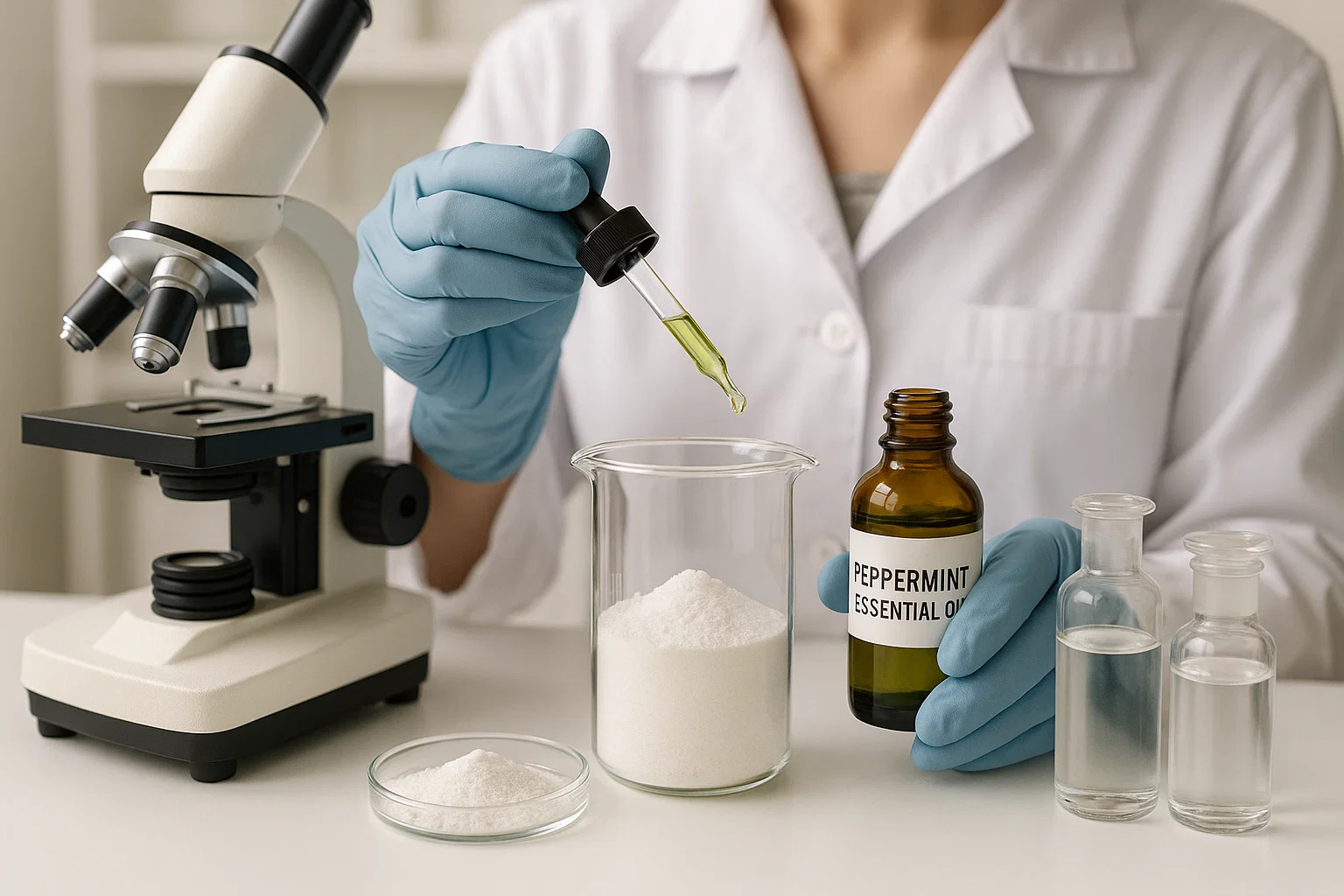
In addition to whitening performance, the taste and texture of the toothpaste play a critical role. Manufacturers add flavor oils such as mint, herbal extracts, or fruit essences to improve consumer experience. Humectants like glycerin prevent toothpaste from drying out, while binders ensure a smooth, consistent texture. These details may seem small but play a big role in brand differentiation.
The OEM Production Process of Whitening Toothpaste
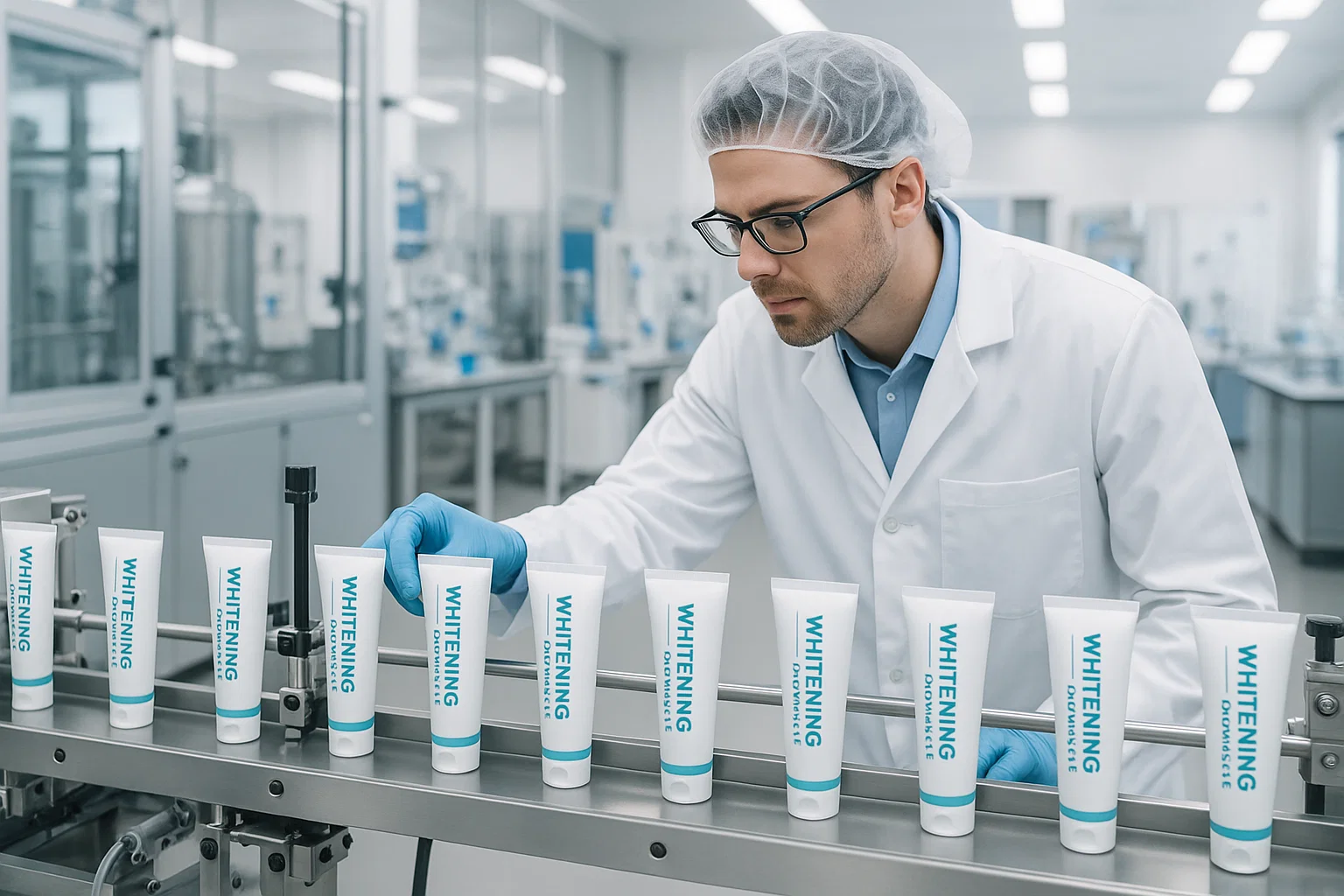
Once the formula is finalized, OEM manufacturing transforms the ingredients into a finished product at scale. Toothpaste production must meet strict hygiene and quality-control standards.
Ingredient Weighing and Mixing
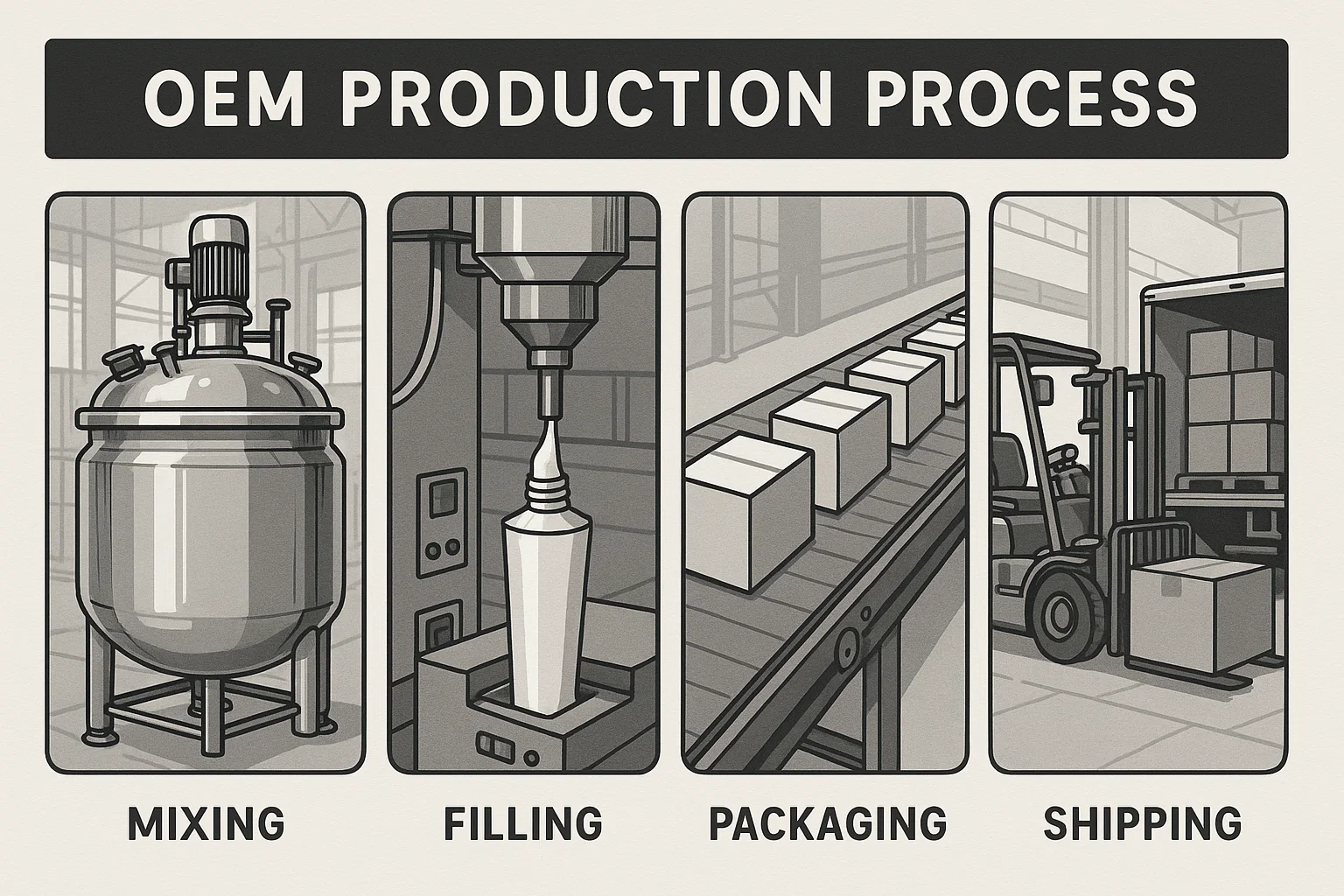
Every batch begins with precise weighing of ingredients. Automated systems ensure accuracy and prevent errors. Technicians blend the ingredients under vacuum conditions. This process eliminates air bubbles and creates a smooth paste.
Blending and Quality Testing
The mixture goes through blending equipment, which ensures an even distribution of abrasives, fluoride, and flavoring agents. Technicians test samples for pH balance, viscosity, whitening effectiveness, and microbial safety before moving forward.
Filling and Sealing
Once quality tests are passed, the whitening toothpaste is filled into tubes using high-speed filling machines. Tubes are heat-sealed or crimped, keeping the product airtight and contamination-free. This step is critical in preserving both shelf life and consumer trust.
To explore OEM toothpaste services, visit OralGos OEM Service. The site outlines the full production process for brand partners.
Packaging Design – More Than Just a Tube
Packaging is the final stage before the product reaches shelves. For whitening toothpaste, OEM packaging is both functional and a marketing tool.
Tube Materials and Innovations
Traditionally, toothpaste is packaged in aluminum or plastic laminate tubes. Today, OEM factories offer eco-friendly alternatives such as:
- Mono-material recyclable tubes
- Biodegradable sugarcane-based tubes
- Press-pump bottles for premium whitening ranges
These sustainable packaging solutions not only appeal to eco-conscious consumers but also align with global retailer requirements.
Box Packaging and Branding
Beyond the tube, the outer box is a key space for branding. OEM packaging allows customization of:
- Logo placement and color schemes
- FSC-certified paper options
- Multilingual labeling for export markets
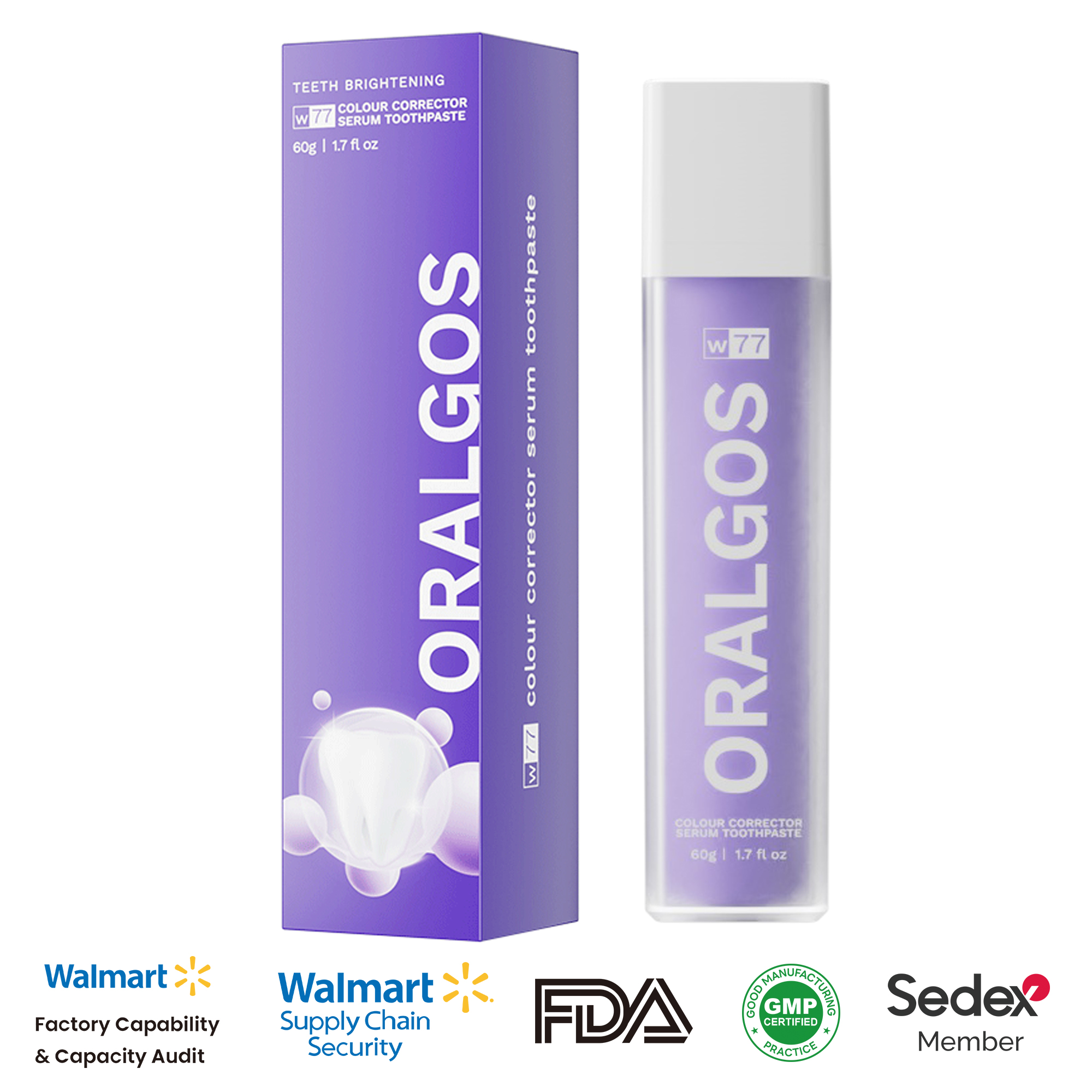
Well-designed packaging reinforces a brand’s identity and ensures compliance with different regional regulations. For more details, browse OralGos Toothpaste Collection, which demonstrates how diverse packaging approaches meet varied market needs.

OEM Advantages for Whitening Toothpaste Brands
For oral-care businesses, partnering with an OEM manufacturer provides several benefits:
- Scalability – production can quickly adapt to growing demand.
- Customization – OEM manufacturers can tailor formulas, flavors, and packaging to match a brand’s identity.
- Compliance Support – manufacturers often provide assistance with FDA, CE, and ISO certifications.
- Speed to Market – streamlined OEM processes reduce lead time, allowing quicker product launches.
When choosing an OEM partner, businesses should evaluate factory certifications, R&D capability, and packaging flexibility.
From Factory Floor to Store Shelf
The journey of whitening toothpaste is a collaboration between science, engineering, and branding. Technicians carefully select, blend, and test ingredients for safety. OEM production ensures efficiency, while packaging transforms the product into a consumer-ready item that communicates trust and quality.
Understanding this process gives oral-care professionals more than just industry knowledge. It also helps them confidently select the right manufacturing partner. By partnering with OEM manufacturers, brands produce whitening toothpaste that enhances smiles. At the same time, the products meet international standards for safety, innovation, and sustainability.
Final Thoughts
The production of whitening toothpaste is far more than mixing powders and flavors. It is a structured process involving R&D, OEM expertise, and packaging strategies that reflect both compliance and creativity.
Brands and distributors build a successful product line by learning how manufacturers produce whitening toothpaste. This understanding guides the choice of the right manufacturing partner. It lays the foundation for building a successful product line.
Collaborating with the right OEM manufacturer and using innovative packaging allows businesses to deliver safe and effective whitening toothpaste. These products can reach consumers around the globe.
For additional insight into toothpaste formulation standards, see American Dental Association – Toothpaste Basics.