The oral care market is rapidly evolving, with consumers across regions showing unique preferences in flavor, formula, and function. For brands aiming to expand internationally, mouthwash manufacturing is no longer a one-size-fits-all process. Instead, success relies on customization—from ingredient selection to packaging and certification—to meet different cultural, regulatory, and consumer expectations.
In this article, we explore how manufacturers adjust their production strategies to meet the diverse needs of global markets. These tailored approaches help brands stand out in a highly competitive environment.
Understanding Regional Preferences in Mouthwash Manufacturing
Every market tells a different story. In North America, mouthwash users prioritize fresh breath and antibacterial power. In contrast, Asian consumers often seek gentler, alcohol-free formulas with herbal ingredients. European markets value eco-friendly and fluoride-based solutions that support long-term oral health.
To meet these expectations, mouthwash manufacturing must adapt formulas and sensory experiences accordingly. For example:
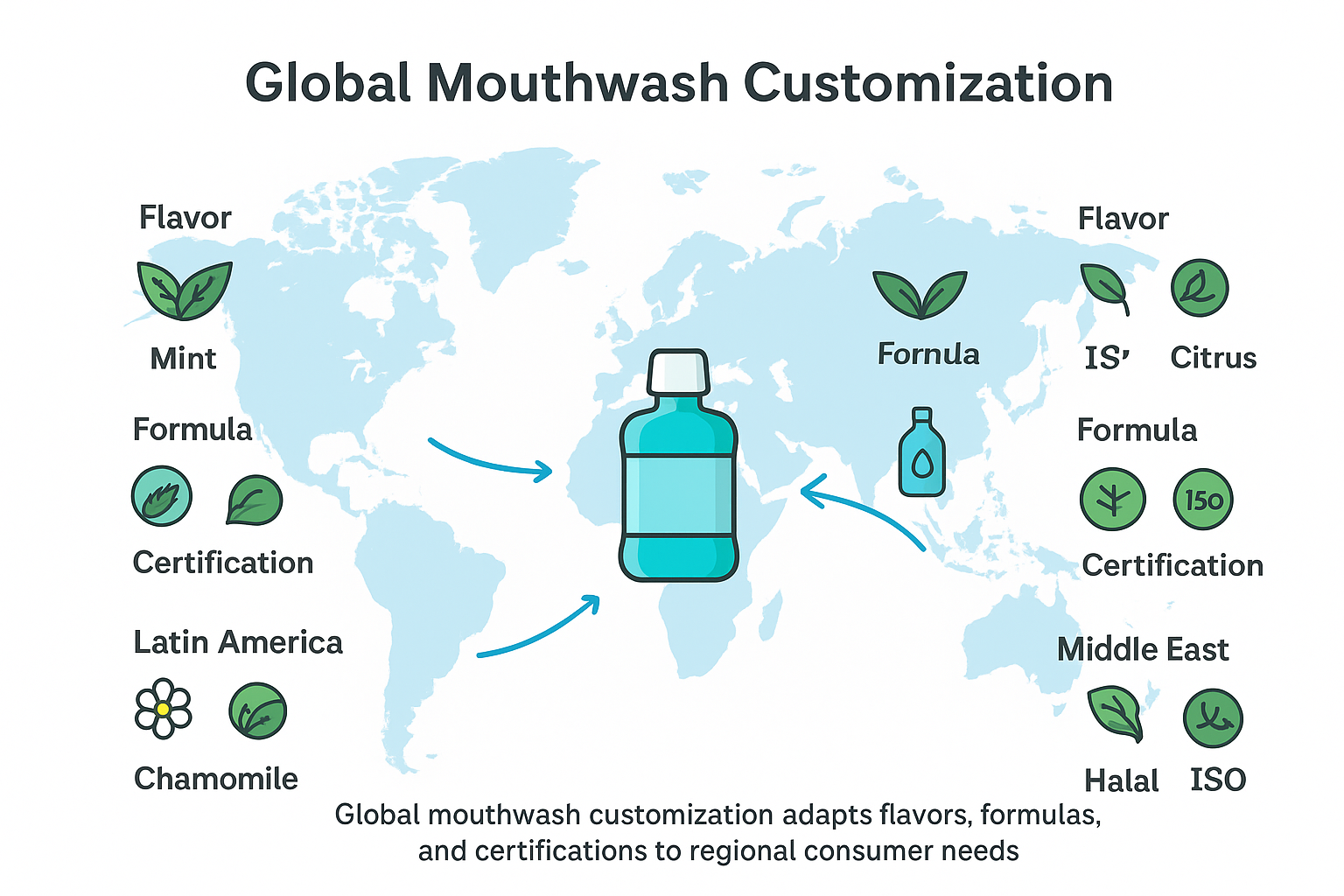
- Flavor Customization: Mint remains universal, but preferences vary by region. In Japan, consumers prefer mild herbal flavors, such as green tea or chamomile. In the Middle East, strong mint and miswak flavors are more popular, reflecting traditional hygiene practices.
- Ingredient Adaptation: U.S. regulations often focus on active antibacterial agents, such as cetylpyridinium chloride (CPC). In contrast, EU laws prioritize plant-based and sustainable alternatives, including essential oils and natural extracts.
- Cultural Sensitivity: Certain ingredients (e.g., alcohol) may not be suitable for markets with religious or cultural restrictions. Custom formulation ensures that products respect local norms while maintaining efficacy.
Customization: The Core of Modern Mouthwash Manufacturing
In today’s global market, customization defines competitiveness. Advanced manufacturers no longer just produce standard mouthwash formulas. Instead, they act as development partners, co-creating tailored solutions with brand owners.
1. Formula Flexibility
OEM manufacturers offer flexible base formulations that can be adjusted to meet specific claims, such as:
- Whitening and anti-stain protection
- Gum care or sensitivity relief
- Alcohol-free and fluoride-enhanced formulas
- Natural and vegan-friendly mouthwash
For instance, a European brand may request an eco-certified formula that emphasizes sustainability. A Middle Eastern client, on the other hand, may require a Halal-certified, alcohol-free product. Manufacturers can develop both products on the same production line by adjusting the ingredient inputs.
2. Flavor Innovation
Consumer experience begins with taste. Manufacturers leverage advanced flavor technology to balance freshness and comfort. Localized taste panels and sensory analysis ensure that each product resonates with its target audience. For example, consumers in Latin America prefer citrus-based variants, while those in colder regions favor menthol-rich options.
3. Packaging Design and Labeling
Customization extends beyond the formula. Bottle shapes, label colors, and even cap sizes vary depending on market standards and consumer habits. For example, consumers in Southeast Asia are increasingly choosing travel-size bottles. In the U.S., family-size bulk packaging remains the most popular option.
Through customized packaging design, brands can reinforce their identity and meet regional retail expectations.
Compliance and Certification for Global Markets
One of the most critical aspects of mouthwash manufacturing is regulatory compliance. Each country imposes its own rules on formulation, labeling, and safety testing. A truly global OEM partner should provide end-to-end support for certifications such as:
- FDA (U.S.) approval for antibacterial claims
- EU Cosmetic Regulation (EC 1223/2009) compliance
- ISO 22716 (GMP) manufacturing certification
- Halal and Vegan certifications for regional markets
- Cruelty-Free and Eco-Cert validations for sustainable brands
By managing these certifications, manufacturers not only ensure compliance but also enhance a brand’s trustworthiness in target markets.
OEM and ODM Solutions for Brand Growth
Partnering with an experienced OEM manufacturer simplifies the process of launching a customized mouthwash line. From R&D to packaging, an OEM partner provides full support for concept realization.
For brands seeking flexible, high-quality solutions, OralGos offers tailored OEM services covering toothpaste, toothbrushes, and mouthwash products. You can explore more about their approach to customization at OralGos OEM Service.
Key Advantages of OEM Mouthwash Manufacturing
- Faster product development cycles
- Lower investment in R&D infrastructure
- Access to certified, scalable production facilities
- Regional flavor and formula customization
- Assistance with international documentation and export logistics
These benefits allow oral care brands to focus on marketing and distribution while ensuring consistent quality and compliance.
Emerging Trends in Mouthwash Customization
Customization is also driven by emerging consumer and technological trends:
- Sustainability: Growing demand for biodegradable packaging and water-saving mouthwash concentrates.
- Functional Formulas: Mouthwash with probiotics, enzymes, or whitening particles tailored for niche audiences.
- Digital Integration: Smart packaging with QR codes linking consumers to product origin, usage tips, and certifications.
Manufacturers who integrate innovation with regional insight gain a long-term advantage in building trust and market share.
Conclusion: Customization Defines the Future of Mouthwash Manufacturing
As global oral care markets continue to diversify, mouthwash manufacturing must evolve beyond traditional production models. Customization in flavor, formula, and certification is essential. It forms the foundation for brand success across different regions.
Brands can work with experienced OEM partners like OralGos to transform market insights into customized product solutions. These solutions meet both consumer preferences and regulatory standards. In short, the future belongs to brands that understand: customization isn’t just about difference—it’s about connection.