Launching an oral care product under an OEM arrangement can be exciting, but it comes with its own set of challenges. Asking the right OEM questions and reviewing the supplier FAQ at the start is essential. This helps minimize risk, control costs, and ensure your product succeeds.
Before starting your oral care OEM project, you need to clarify ten key questions. These cover everything from market positioning to supply chain management.
1. Market Positioning and Demand Validation – Key OEM Questions & Supplier FAQ
Who is your target customer? – OEM Questions to Consider
Decide who your product is for. Is it intended for mass-market consumers, premium buyers, children, or people with sensitive oral care needs? Understanding your audience influences not only the formulation but also packaging and marketing strategy.


What is the competitive landscape? – Supplier FAQ Insight
Analyze competitors’ pricing, core selling points, and growth trends. For example, probiotic toothpaste has grown by 30% in recent years. However, it is essential to verify both the technological feasibility and market acceptance before launching.
2. Minimum Order Quantity (MOQ) and Cost Balance for OEM Projects
What are the factory’s MOQ requirements?
Align the factory’s MOQ with your initial budget. Some OEMs allow phased orders. For example, you could start with a first batch of 50,000 units and place additional orders later. This approach helps manage inventory and cash flow efficiently.
3. Regulatory Compliance – OEM Questions and Supplier FAQ Explained
Which certifications or approvals are necessary? – OEM Questions
Oral care products may require medical device registration (Class II) or cosmetic product notification, depending on local regulations. Ensure the OEM factory has ISO 22716/ISO 13485 certifications and can provide standard testing report templates.
Who owns the intellectual property of the formulation? – Supplier FAQ
Clarify whether the patent rights for custom formulas are exclusive. Additionally, confirm that the factory is prohibited from supplying similar formulations to competitors. Contracts should explicitly define these terms.
4. Supply Chain and Production Control – Essential OEM Questions
Are critical raw materials stable and reliable? – OEM Questions for Suppliers
Determine if the factory sources key ingredients, such as fluoride or xylitol, locally or imports them. Also, check whether alternative suppliers are available. Understand pricing volatility and consider contracts that lock in long-term costs.
What are the quality control standards? – Supplier FAQ Guidance
Discuss defect tolerance (industry average ≤0.5%) and inspection responsibilities. Decide who will pay the costs if a product recall or quality failure occurs.
5. Collaboration Terms and Risk Management for OEM Projects
What are the delivery timelines and penalties for delays? – OEM Questions
Standard toothpaste production may take 45 days, with sterilization processes extending the timeline. Contracts should specify penalties (suggested ≥5% of order value) for late delivery.
What are the exit and transition plans? – Supplier FAQ
If the partnership ends, clarify who will handle molds and packaging inventory. Also, determine whether you can move production to another factory to avoid supply chain dependency.
6. Cost Structure and Profitability – OEM Questions You Must Ask
Are hidden costs accounted for? – OEM Questions to Ask
Verify that the factory includes packaging design fees, mold costs, logistics, customs, and quality inspections in the quotation.
Is there a viable pricing strategy? – Supplier FAQ Insight
Ensure OEM costs are within 15%-25% of your retail price. Ask about tiered pricing for larger orders (e.g., 10% discount on orders above 100,000 units).
7. Learn From Case Studies – OEM Supplier FAQ in Practice
Many brands have successfully navigated OEM partnerships by thoroughly addressing these questions. For example, a private-label toothpaste brand partnered with a certified ISO 13485 factory. They used phased orders, which reduced their initial inventory risk by 20% while maintaining product quality.
8. Continuous Supplier Communication – OEM Questions to Address
Regular discussions with your OEM partner help prevent misunderstandings. Create a supplier FAQ sheet covering MOQs, delivery schedules, compliance documentation, and quality control processes. This proactive approach minimizes delays and ensures expectations are clear.
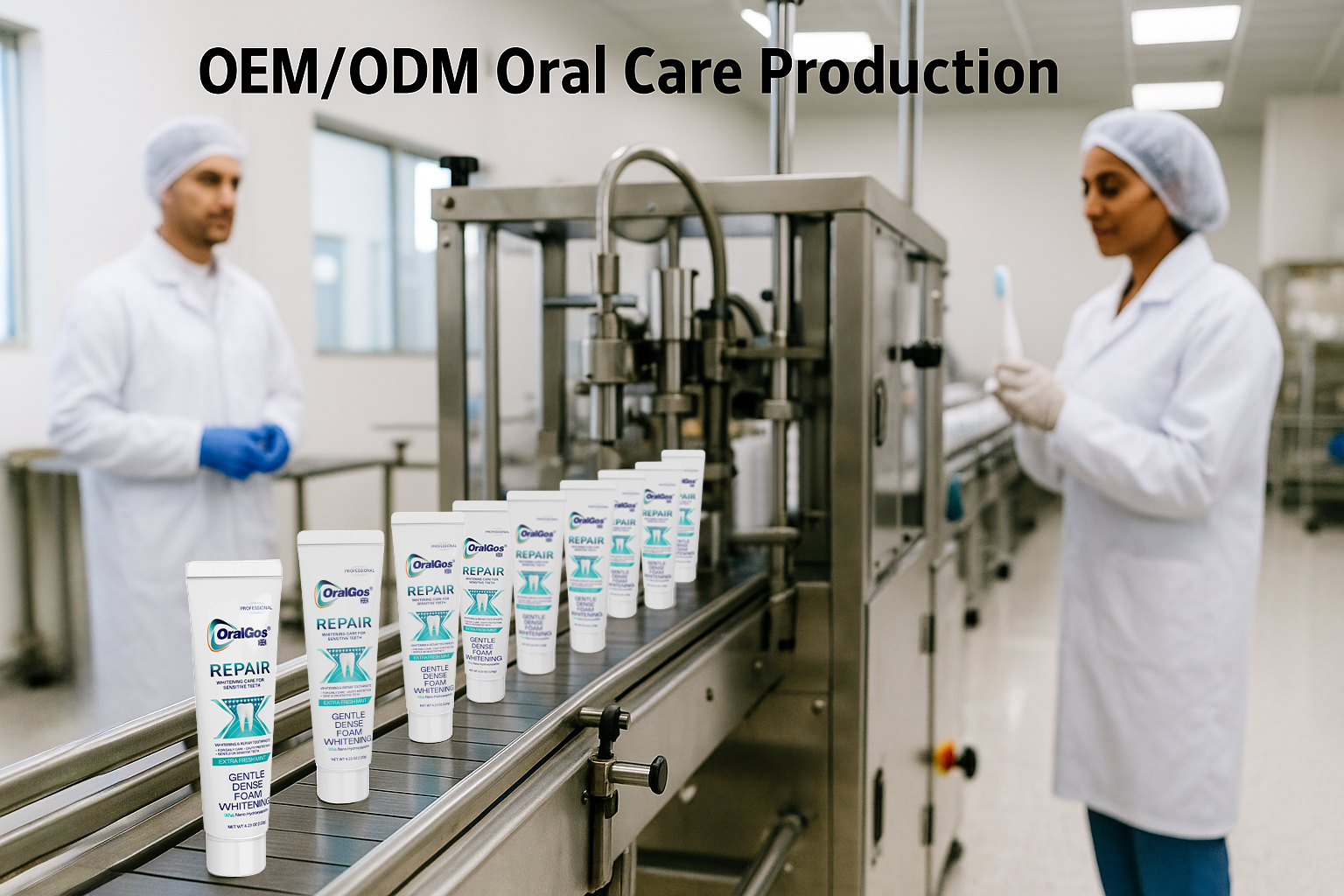
For detailed guidance on OEM partnerships, visit OralGos OEM Service or contact us for personalized advice.
By addressing these OEM questions and supplier FAQ, brands can confidently launch oral care products with a clear roadmap. Focusing early on market validation, regulatory compliance, supply chain stability, and cost planning can save time and reduce risk. It also helps maximize profitability.