Walking down the dental care aisle can feel surprisingly overwhelming. With dozens of colors, handle designs, and bristle configurations available, one fundamental decision often gets overlooked: bristle stiffness.
Should you choose a firm, medium, or soft bristle head? Is harder actually better for scrubbing away plaque, or does it do more harm than good? The debate over a soft vs medium toothbrush isn’t just a matter of personal comfort—it comes down to the science of dental enamel, gum health, and biomechanics.
The Physics of Plaque Removal: Harder Doesn’t Mean Cleaner
To understand bristle stiffness, we first need to look at what we are trying to remove: dental plaque. Plaque is a soft, sticky biofilm made of bacteria that accumulates on your teeth throughout the day. Because plaque is soft, removing it does not require intense mechanical force or abrasive scrubbing.
Many people assume that stiff bristles clean teeth more effectively, much like a stiff broom sweeps a garage floor better than a soft feather duster. However, your teeth and gums are living, delicate tissues—not concrete.
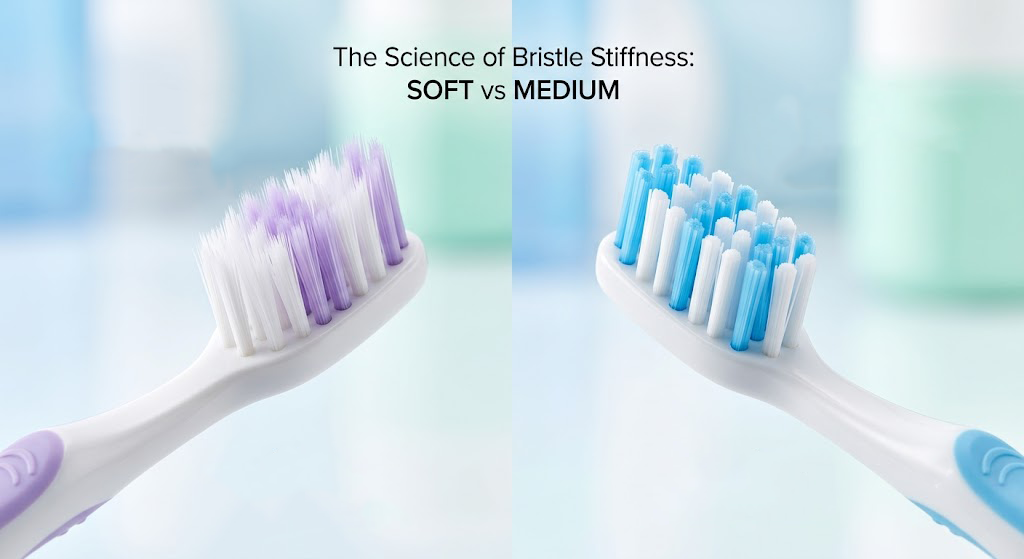
Stiffer bristles require more force to bend. When you press a hard or medium brush against your teeth, the stiff bristles resist flexing, which can cause them to act like tiny chisels against your gumline and enamel.
Soft vs Medium Toothbrush: What Does the Science Say?
When evaluating a soft vs medium toothbrush, dental experts look at two primary factors: plaque removal efficiency and tissue safety.
1. Enamel Wear and Abrasion
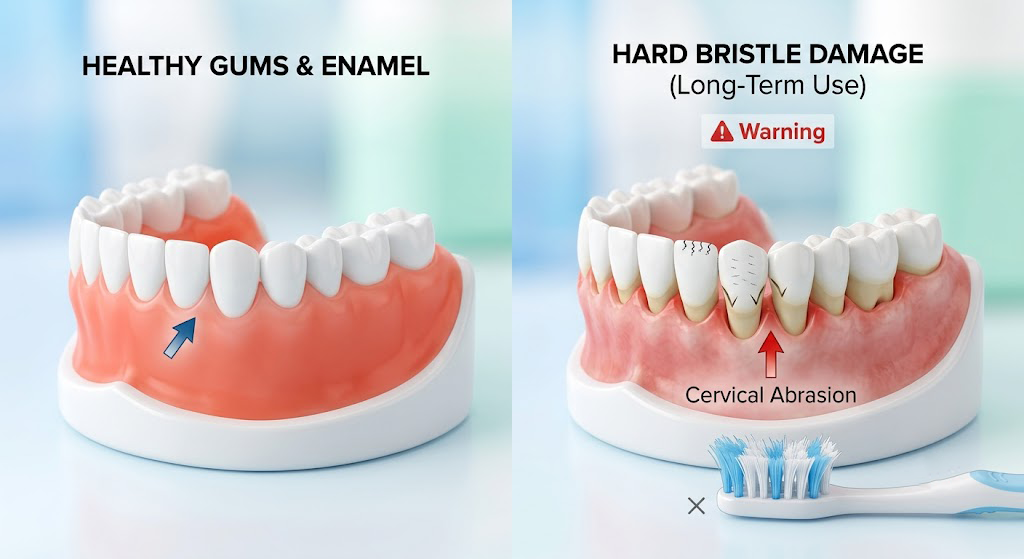
Tooth enamel is the hardest substance in the human body, but it is not indestructible. Over time, aggressive brushing with stiff bristles can cause cervical abrasion—the wearing away of enamel near the gumline.
While a medium bristle brush can scrub away surface stains quickly, studies show that it significantly increases the risk of enamel erosion when combined with abrasive toothpaste. Once enamel is lost, it cannot regenerate, often leading to tooth sensitivity and an increased risk of decay.
2. Gum Health and Recession
Your gums act as a protective seal around the roots of your teeth. Medium and hard bristles can cause micro-trauma to this delicate tissue, leading to gum recession over time.
When gums recede, the underlying dentin is exposed. Dentin contains microscopic tubules that lead straight to the tooth’s nerve center, causing sharp pain when exposed to hot, cold, or sweet foods.
According to the American Dental Association, using a brush with soft bristles applied with gentle pressure is the safest and most effective way to remove plaque without damaging your gums or enamel.
The Verdict: Which Bristle Stiffness Should You Choose?
Now that we understand the impact of bristle mechanics, how do you decide which type fits your routine?
Why Soft Bristles Win for Most People
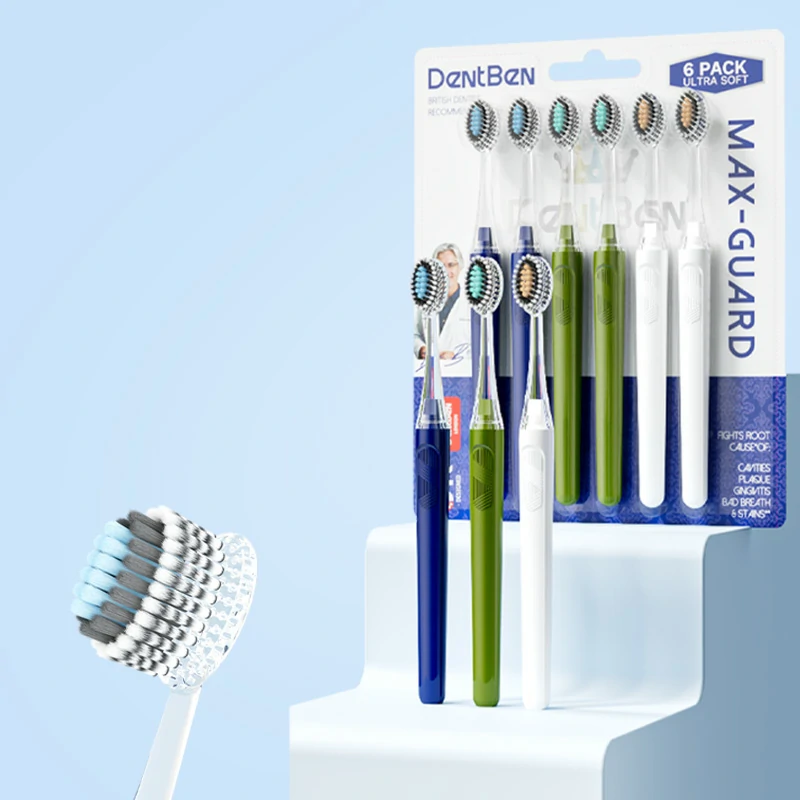
For the vast majority of adults and children, soft-bristled toothbrushes are the gold standard.
- Flexibility: Soft bristles bend easily, allowing them to slide under the gumline and into the tight spaces between teeth where plaque loves to hide.
- Safety: They remove biofilm thoroughly without scratching enamel or irritating sensitive gums.
- Versatility: They are ideal for people with sensitive teeth, receding gums, or those recovering from dental procedures.
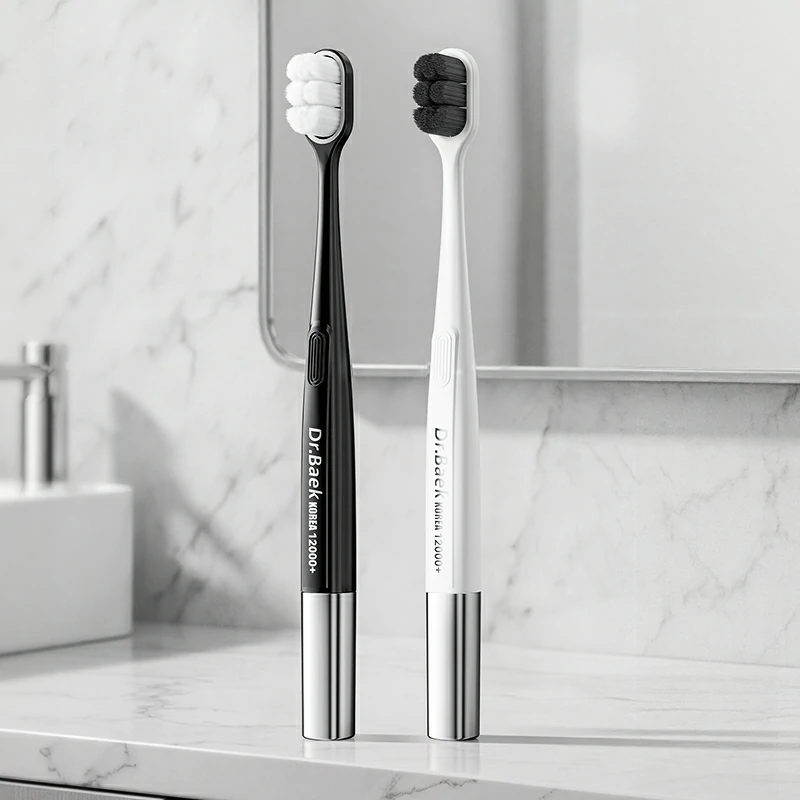
If you prefer a classic daily routine, switching to a high-quality manual toothbrush with ultra-soft bristles ensures you maintain optimal hygiene without risking long-term structural damage to your mouth.
Is There Ever a Need for a Medium Toothbrush?
While dental professionals rarely recommend medium bristles for daily oral hygiene, some people feel they need extra scrubbing power—especially if they are prone to heavy surface staining from coffee or tea.
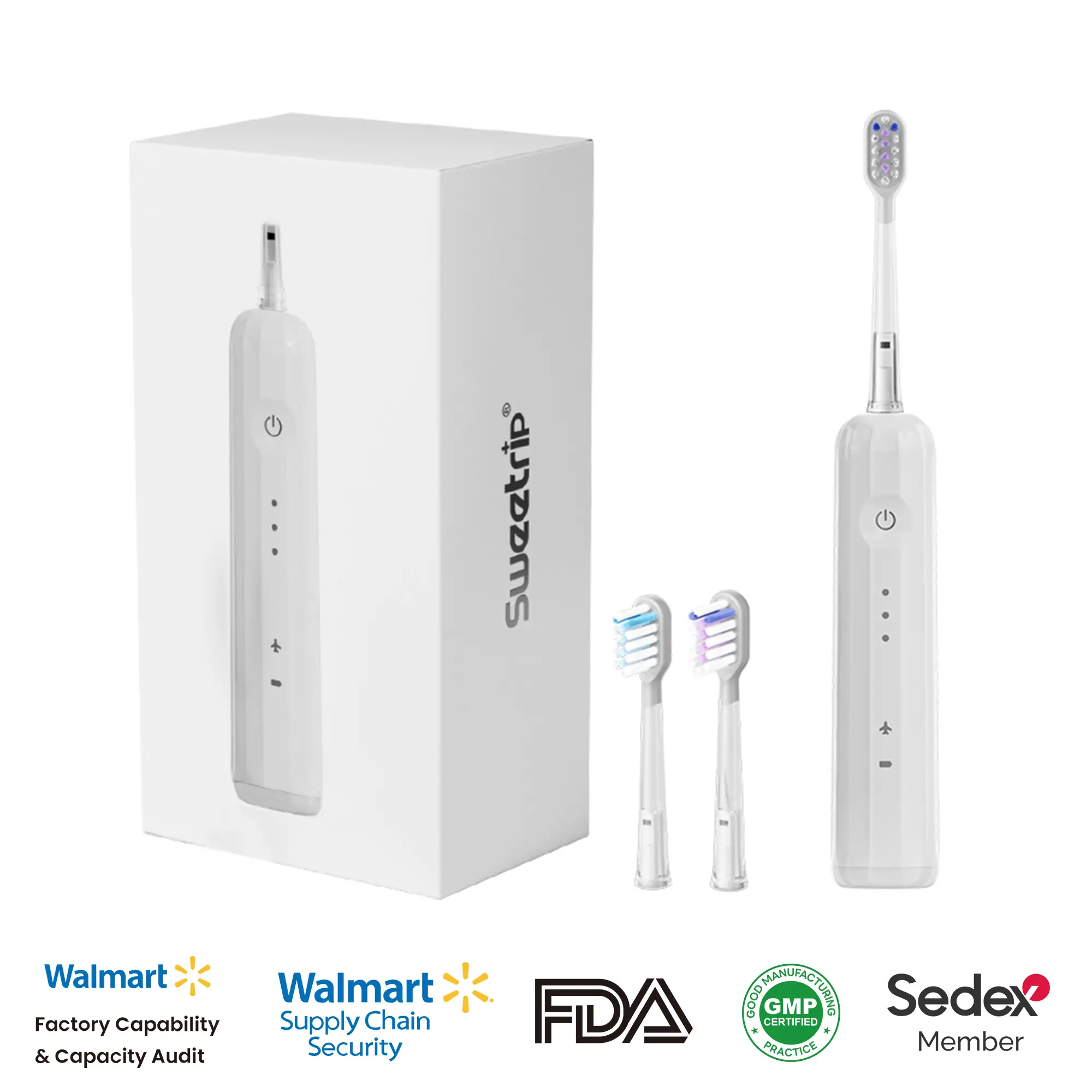
However, if you feel a soft manual brush isn’t giving you that deep-clean feeling, the solution isn’t to switch to a harsher bristle. Instead, upgrading to an electric toothbrush offers a superior alternative. Electric toothbrushes use micro-vibrations or oscillations combined with soft bristles to break up plaque effortlessly, giving you an intense clean while keeping your enamel completely safe.
Tips for Brushing Safely and Effectively
Choosing the right toothbrush is only half the battle; your technique matters just as much. Follow these evidence-based tips to keep your smile healthy:
- Hold Brush at a 45-Degree Angle: Aim the bristles toward the line where your teeth meet your gums.
- Use Short, Gentle Strokes: Move the brush back and forth in tooth-wide strokes rather than scrubbing vigorously across the teeth.
- Don’t Press Too Hard: If your bristles fan out within a few weeks, you are applying too much pressure. Let the tips of the bristles do the work.
- Replace Your Brush Regularly: Swap out your toothbrush or electric head every 3 to 4 months, or sooner if the bristles become frayed. Frayed bristles lose their effectiveness and can harbor bacteria.
Conclusion
When weighing the options in the soft vs medium toothbrush debate, scientific research and clinical advice lean heavily toward soft bristles. Soft bristles offer the perfect balance of flexibility and gentleness, effectively clearing away plaque while protecting your enamel and gums from premature wear.
Take a moment to evaluate your current toothbrush today. Making a simple switch to soft bristles could save you from costly dental repairs and keep your smile shining safely for years to come.