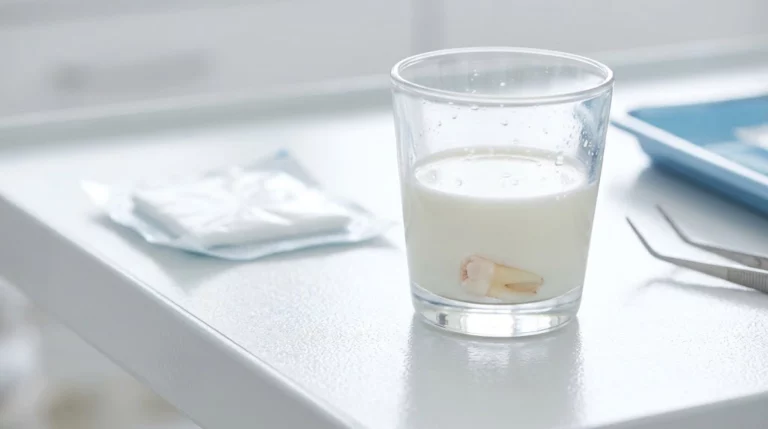
Maintaining optimal oral hygiene extends beyond brushing your teeth twice daily. Standard toothbrushes only clean about 65% of tooth surfaces. They miss the hidden areas between your teeth where plaque builds up. Interdental cleaning is necessary to remove trapped food debris and bacterial biofilm from between teeth. For decades, dental professionals considered traditional string floss the gold standard for interdental care. However, oral irrigators have gained significant popularity among consumers and dental hygienists alike. When comparing a water flosser vs string floss, what does dental research actually reveal? Science points to clear differences in plaque removal and gum health.
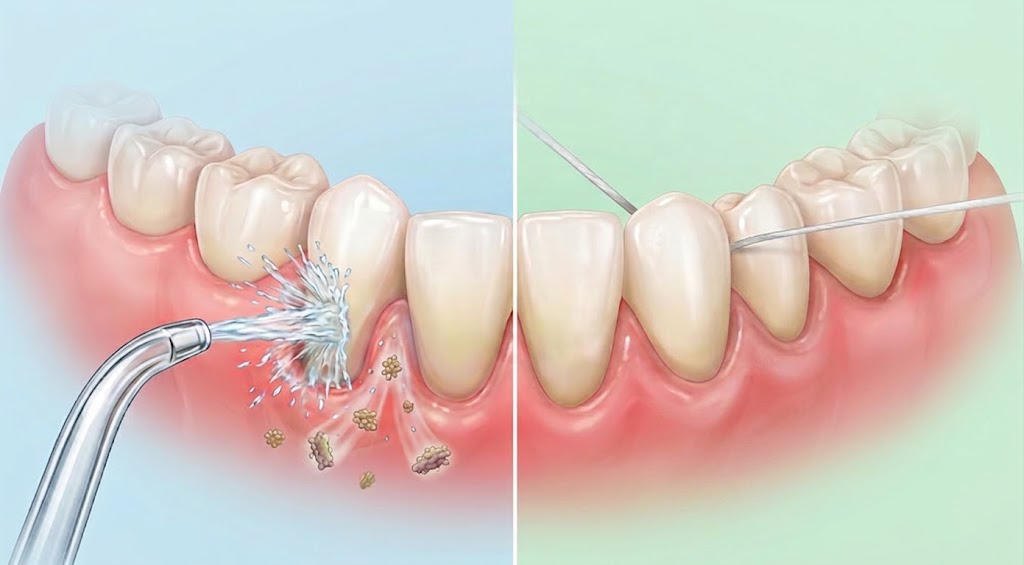
Water Flosser vs String Floss: What the Clinical Research Says
Many clinical studies have compared water flossers directly with manual string floss. These studies mainly measure three key markers: plaque reduction, gum bleeding, and overall gum inflammation.
Plaque Removal Efficacy: Water Flosser vs String Floss
Plaque is a sticky film of bacteria that constantly forms on teeth. If left untreated, plaque hardens into calculus (tartar) and leads to tooth decay and periodontal disease.
- Traditional String Floss: String floss uses mechanical friction to scrape bacterial biofilm off the proximal tooth surfaces. Floss is highly effective when used with the right technique. Curving the string into a “C” shape removes plaque from tight gaps between teeth.
- Water Flossers: Water flossers utilize a targeted stream of pressurized, pulsating water to flush away biofilm and food particles. Combining a water flosser with a manual toothbrush removes significantly more plaque than using string floss with a toothbrush. A landmark study in the Journal of Clinical Dentistry confirms this finding. The pulsating water stream reaches deep into periodontal pockets where rigid string cannot safely enter.
Gingival Health and Bleeding Reduction in Flossing Studies
Gingival bleeding is one of the earliest indicators of gum inflammation and early-stage periodontal issues. Multiple comparative trials show a distinct advantage for oral irrigation in reducing gingival inflammation.
When comparing a water flosser vs string floss, studies show striking results. Oral irrigators were up to 51% more effective at reducing gum bleeding than traditional floss. Gentle pulsing water massages your gums to boost blood circulation. Unlike string floss, it cleans without cutting delicate gum tissue if you press too hard.
Key Benefits of Traditional String Floss for Daily Cleaning
Even with modern water flossers available, traditional string floss remains a popular daily choice.
- Precision Scraping Action: String floss gives you direct control. You can physically feel the pressure and scrape away stubborn plaque build-up.
- Portability and Cost: String floss requires no electrical power, charging cables, or water reservoirs. It offers a cheap, portable, and convenient way to clean teeth on the go.
- Ideal for Tight Contact Points: Waxed string easily slides between extremely tight or crowded teeth. In these narrow gaps, water flossers might need higher pressure settings to clean as well.
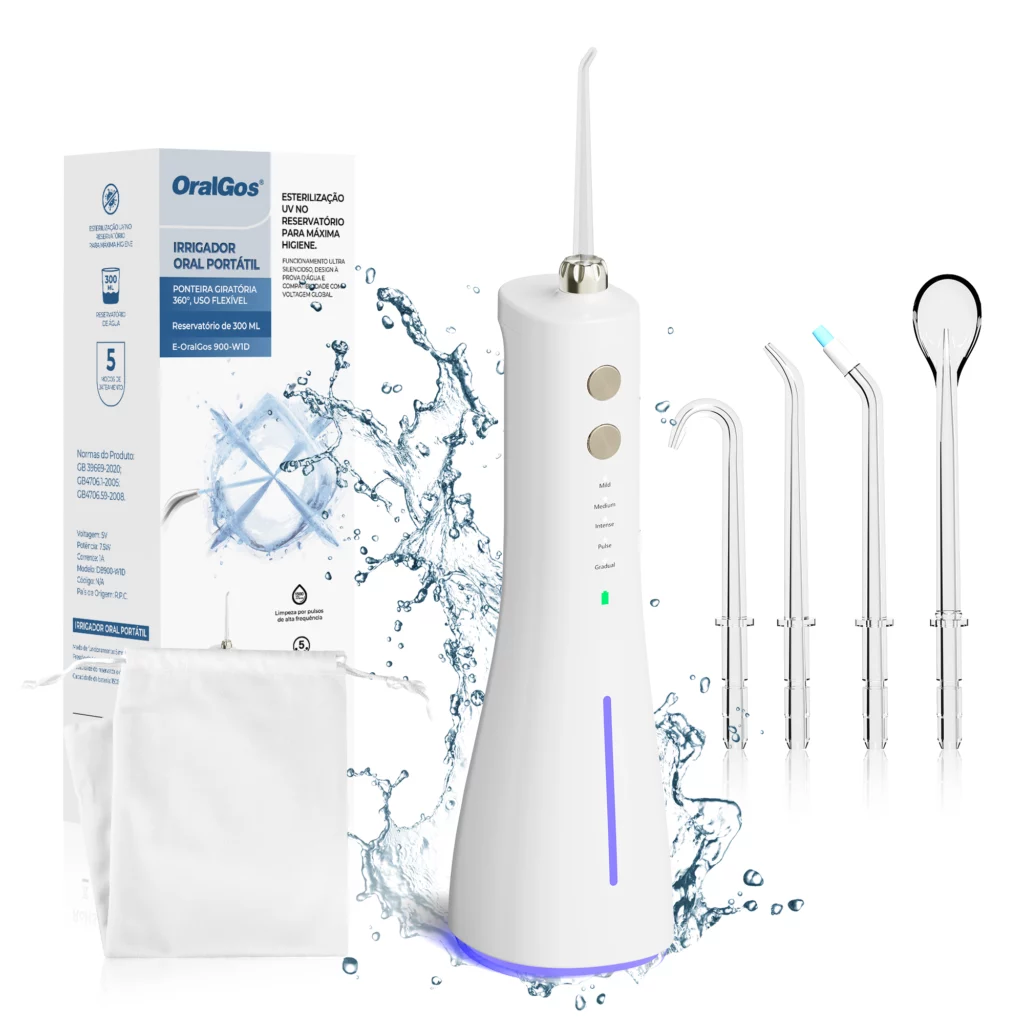

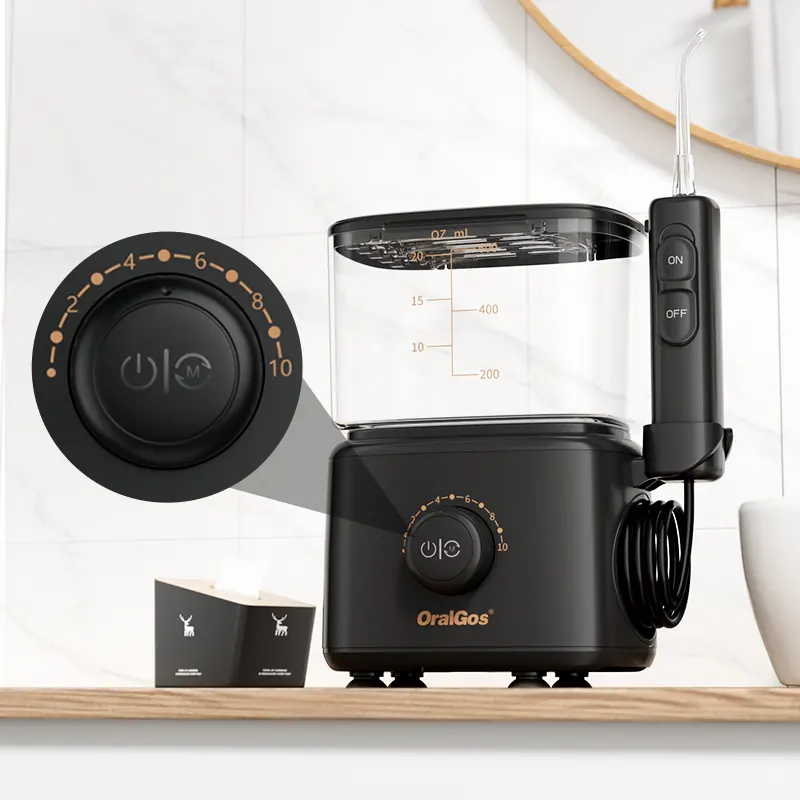
Key Benefits of Using an Oral Water Flosser
Modern water flossers offer powerful oral health benefits. They are easy to use for people with braces, implants, or hand mobility challenges.
- Superior Ease of Use: Threading manual floss requires high fine-motor skills and proper technique. Water flossers are simple to use. Just point the tip along your gumline and let the water stream wash away plaque between teeth.
- Essential for Orthodontics and Dental Implants: Using traditional string floss around braces, bridges, or implants is extremely challenging. It often requires tedious specialized threaders to get the job done. High-quality water flossers easily flush out trapped debris from around braces and dental work. Plus, they clean smoothly without catching or leaving fibers behind.
- Deep Periodontal Pocket Access: Pulsing water cleans deep below the gumline, reaching up to 6 mm into deep pockets. It flushes out harmful bacteria that string floss cannot reach without hurting your gums.
The American Dental Association recommends flossing once daily to prevent cavities and gum disease. Products with the ADA Seal of Acceptance are proven safe and effective when used correctly. This applies to traditional string floss, interdental brushes, and water flossers alike.
Comparison Summary: Water Flosser vs String Floss
| Feature / Metric | Water Flosser | Traditional String Floss |
| Plaque Biofilm Removal | High (flushes debris & subgingival biofilm) | High (scrapes surface biofilm with proper technique) |
| Gingival Bleeding Reduction | Superior (gentle hydro-massage) | Moderate (risk of tissue cutting if snapped) |
| Ease of Learning / Use | Very High | Moderate (requires high manual dexterity) |
| Orthodontic & Implant Safety | Excellent (non-contact cleaning) | Difficult (requires floss threaders) |
| Subgingival Access | Up to 6 mm depth | 2–3 mm maximum depth |
| Portability | Requires charging/water source | Extremely portable |
Final Verdict: Which Interdental Flossing Method Should You Choose?
Dental studies show that water flossers work just as well as traditional string floss. In fact, they often do a better job at reducing plaque, gum bleeding, and inflammation.
However, the single best interdental tool is the one you will actually use consistently every day. If string floss already works for you and your gums are healthy, keep doing what you are doing. You can confidently stick with what works.
A water flosser is particularly beneficial for people with braces, implants, or sensitive gums. It provides a simple, clinically backed way to protect your smile.